If you’ve ever stood in front of a piping design board, surrounded by blueprints marked with hundreds of dashed lines and material specs, wondering which fittings will hold up to your project’s pressure, temperature, and maintenance needs, you’re not alone. Early in my career as a grooved fittings supplier, I once watched a junior piping designer specify threaded fittings for a commercial HVAC project that would be buried under a concrete slab— a choice that came back to haunt us six months later when a leak required jackhammering a 40-foot section of floor. That mistake taught me a critical lesson: choosing the right fitting isn’t just about specs, it’s about understanding how each type works, and where their strengths (and weaknesses) lie. Today, I’m breaking down the difference between grooved fittings and threaded fittings, from how they install to how they perform under pressure, because I want you to make a choice that saves you time, money, and headaches down the line. Grooved Fitting
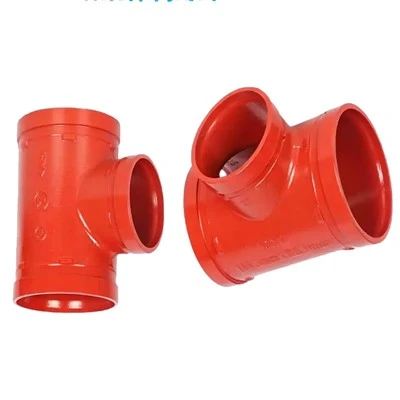
Let’s start with the basics, because both grooved and threaded fittings are designed to connect sections of pipe, right? Threaded fittings have been around for over a century— their design is simple, at first glance: you cut external threads on the end of a pipe, then twist it into a fitting with internal threads, usually secured with a thread sealant like Teflon tape or pipe dope. Grooved fittings, by contrast, connect pipe ends that have a circular groove machined into their outer surface. You slide a housing over each grooved end, fit a rubber gasket between the two grooves, and tighten bolts on the housing to compress the gasket tight against the grooves, creating a pressure-tight seal. The manufacturing difference alone is a good starting point, but that small variation leads to huge gaps in performance, installation speed, and long-term reliability.
First, let’s talk about installation, because that’s the part that often makes project managers pick a side before they even consider pressure ratings. Threaded fittings are tedious for any job longer than a few feet. To thread a pipe, you need specialized tools: a pipe threader, which is a large, clunky machine that clamps onto the pipe and cuts threads with sharp dies. For small-diameter pipe (usually 2 inches or less), that’s manageable, but when you’re working with 4-inch or 6-inch pipe, threading it manually takes hours, and even power threaders can struggle with thick-walled carbon steel. You also have to be precise: if threads are cut unevenly, you get leaks, which means re-cutting or reaming the pipe, delaying your timeline. On top of that, threaded joints are directional— you have to align the pipe perfectly with the fitting, because twisting it too far or not enough ruins the seal. I’ve watched two plumbers spend 45 minutes wrestling a 3-inch threaded elbow into place on a wastewater line in 90-degree heat, sweating through their uniforms because the pipe just wouldn’t seat right.
Grooved fittings? Installation is almost effortless, even for larger pipe. No threader, no special dies, no measuring and cutting perfect threads. You just take your pipe— whatever diameter (from ½ inch up to 12 inches, even larger for industrial projects), slide the housing over the grooved end, line up the two pipes, insert the rubber gasket, and tighten the bolts on the housing with a standard wrench. A crew of two can install a 10-foot section of 6-inch grooved pipe in 15 minutes, compared to two hours for threaded pipe of the same size. That speed isn’t just a convenience— it translates to real cost savings: less labor time, fewer overtime charges, and faster project completion, which means you get paid sooner. I recently worked with a contractor on a 15-story hotel project that switched from threaded to grooved fittings halfway through rough-in, and they finished the piping phase three days ahead of schedule, saving an estimated $12,000 in labor costs. The plumber foreman told me, “We haven’t had to ream a pipe in weeks— it’s like working with Legos for grown-ups.”
Next, pressure and temperature performance, which is where the real difference shows, especially for high-stakes projects. Threaded fittings have a fundamental design flaw: the threads create stress concentrations in the pipe. Every time you twist a pipe into a fitting, you’re putting friction and tension on the threads, which can weaken the pipe wall over time— especially for thinner-walled pipe common in commercial and residential projects. For low-pressure applications (like a small residential water line under 150 PSI), that weakness might not matter, but for high-pressure systems (like fire sprinklers, industrial process piping, or high-rise plumbing that carries water up 50 floors), threaded joints are a risk. The National Fire Protection Association (NFPA) actually limits threaded fittings for fire sprinkler systems over 2 inches in diameter, because the thread stress can cause pipe rupture under pressure. I had a client a few years back who had a threaded fire line in a manufacturing plant that failed during a pressure test, splitting along the threads and spraying water that damaged $50,000 worth of raw materials.
Grooved fittings, on the other hand, distribute pressure evenly across the entire pipe end, not just at a few thread points. The housing compresses the gasket uniformly into the grooves, creating a seal that can handle pressure ratings up to 300 PSI and higher, depending on the fitting material. They also perform better at extreme temperatures: threaded fittings can crack or leak when temperatures drop below freezing, because the thread gaps expand and contract unevenly. Grooved joints are flexible, so they can move with thermal expansion and contraction— that means less stress on the pipe, fewer leaks, and less need for expansion joints, which is another cost saver. I’ve seen grooved piping systems work in temperatures ranging from -40 degrees Fahrenheit (for cold storage warehouses) to 450 degrees Fahrenheit (for industrial steam lines), with zero leaks in 10 years of service. Threaded fittings? At that temperature range, the seal would break within a year, guaranteed.
Maintenance and longevity are two more areas where grooved fittings outshine threaded ones, and this is something I see clients come back to us for all the time. Threaded fittings are permanent once installed— you can’t take a pipe apart without destroying the threads, or at least damaging them enough that you have to replace the entire fitting. If you need to modify a piping system, add a new branch, or fix a leak, you have to cut out the entire threaded section, re-thread new pipe, and re-install the fitting. That means shutting down the entire system, which is a huge problem for hospitals, data centers, or manufacturing plants that can’t afford downtime. I once worked with a hospital that had to shut down their medical gas line for 12 hours to replace a faulty threaded elbow, costing them over $20,000 in lost service and emergency overtime.
Grooved fittings, though, are removable and reusable. The bolts on the housing just unthread, you slide the housing back, pull the joint apart, and if the gasket is in good shape, you can re-use the entire fitting. Modifying a system takes minutes, not hours, and you don’t have to shut down the whole line— you can isolate a section with a valve, make your change, and be back up and running. That flexibility is a game-changer for any facility that needs to adapt, whether it’s adding a new restaurant line to a commercial kitchen, or upgrading a process line in a factory. Longevity-wise, grooved fittings have a 50+ year service life when installed correctly, compared to threaded fittings which typically last 15-20 years before needing replacement, especially in corrosive environments. Threads can corrode, seize, or rust over time, making them almost impossible to remove without a torch or a hammer— a situation no one wants to deal with when a pipe is buried under concrete or inside a wall.
Of course, threaded fittings do have their place, and I’m not here to say they’re never the right choice. Threaded fittings are cheap, for one thing— the materials and manufacturing cost is lower than grooved fittings, so if you have a tiny, low-pressure project, like a small residential water heater connection or a ½-inch gas line, the cost difference might make sense. They’re also easier to source quickly if you only need one or two fittings, at a local hardware store, whereas large grooved fittings might be special-order. But even then, for most commercial, industrial, and institutional projects, grooved fittings are the smarter long-term choice.
Let me circle back to that early career mistake I mentioned: the HVAC project buried under concrete. The threaded fittings leaked six months after installation, and by the time we jackhammered the slab, we found that the threads had corroded and the stress from pressure had caused a small crack in the pipe wall. The fix cost $18,000, not including the labor, and delayed the project’s opening by two weeks. If we’d used grooved fittings, the installation would have been faster, the joint would have been more reliable, and we would have avoided that entire headache. That’s the reality of choosing the right fitting: it’s not just about checking a box on a blueprint, it’s about investing in a system that works for years, not just for the initial build.
At the end of the day, the difference between grooved fittings and threaded fittings boils down to three core things: installation speed, performance under pressure and temperature, and long-term flexibility. Threaded fittings work for small, simple jobs, but grooved fittings are built for the projects that matter— the ones where downtime costs money, pressure is high, and reliability is non-negotiable. I’ve spent 15 years as a grooved fittings supplier, working with contractors and engineers across the country, and I can tell you: when you choose grooved fittings, you’re not just buying a component— you’re buying peace of mind.

If you’re working on a project and need help figuring out which fitting is right for you, or if you’re ready to upgrade your piping system to grooved fittings, I’d love to chat. We’ve worked on everything from small retail plumbing to 20-story office buildings, and we can help you spec the right fittings for your needs, on time and on budget.
Steel Pipe References
- National Fire Protection Association. (2022). NFPA 13: Standard for the Installation of Sprinkler Systems. Quincy, MA: NFPA.
- American Water Works Association. (2019). AWWA M9: Concrete Pressure Pipe. Denver, CO: AWWA.
- Plastic Pipe and Fittings Association. (2021). Design and Installation Manual for Plastic Piping Systems. Alexandria, VA: PPFA.
- Grooved Pipe Fitting Manufacturers Association. (2020). Technical Guide to Grooved Mechanical Pipe Joining Systems. Washington, D.C.: GPMA.
- Occupational Safety and Health Administration. (2018). Process Piping Safety Guidelines for Industrial Facilities. Washington, D.C.: OSHA.
Shenzhen Gangyuanlong Building Materials Co., Ltd.
As one of the most professional grooved fitting manufacturers and suppliers in China, we also support customized service with low price. Please feel free to wholesale premium grooved fitting in stock here from our factory. Also, quotation is available.
Address: No. 10-1, Jinlong 4th Road, Baolong Community, Longgang Subdistrict, Longgang District, Shenzhen
E-mail: szgylco@gmail.com
WebSite: https://www.szgylco.com/
