Hey everyone, thanks for stopping by – if you’ve ever tried to spruce up your yard, build a feature wall, or even fix a tricky landscape gap, you’ve probably stared at that age-old question: real rock vs. faux rock. As a faux rock supplier who’s been in the game for over a decade, I get asked this at least 10 times a day: “Which one’s actually cheaper in the long run?” Spoiler alert – it’s not a straight answer, and it depends on way more than just the price tag of the rock itself. Let’s break this down like we chat over coffee, no stuffy spreadsheets here. Faux Rock
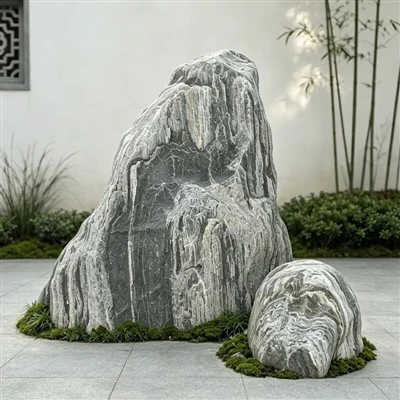
First, let’s get one thing out of the way upfront: I’m not gonna bash real rock. It’s got that timeless, raw vibe that some clients swear by, and I get that. But I’ve seen way too many people walk into a landscaping job, budget $500 for real stone, and end up dropping twice that before it’s all said and done. Let’s start with the hard costs, because that’s usually what everyone fixates on first.
If we’re talking basic, grab-and-go real rock – think landscape boulders for a garden bed, or thin veneer for accent walls – you’re looking at roughly $50 to $150 per square foot, depending on where you live and what type of rock you want. Limestone, for example, is on the lower end, while granite or sandstone can creep way up, especially if you’re ordering it from a quarry that’s 50+ miles away. Faux rock, on the other hand, usually clocks in at $30 to $80 per square foot for our standard residential lines. Wait, that’s a big gap on paper, right? But hold on – that’s before you add all the hidden costs that trip people up with real rock.
Let’s talk delivery first. Real rock is heavy. Like, really heavy. A single 2-foot boulder can weigh 200 pounds, and if you’re doing a full accent wall, you’re talking thousands of pounds of material. Most standard pickup trucks can’t haul that kind of weight safely, so you’re stuck renting a flatbed truck or hiring a local quarry’s delivery service. Those fees aren’t cheap – we’re talking $150 to $500 just to get the rock to your driveway, depending on distance. Faux rock? It’s lightweight, like 10 to 15 pounds per panel, because it’s made of durable fiberglass and recycled materials (no, it’s not flimsy, we test every batch to handle rain, freeze-thaw, even minor impacts). A standard pallet of our wall panels weighs less than 500 pounds, so most regular moving trucks can handle it, and delivery fees are often 50% less than real rock – usually $75 to $200, even for longer routes. That’s a quick $200 to $300 saved right there, no fancy math needed.
Then there’s labor. This is where the biggest difference hits, hands down. Real rock installation isn’t for amateurs – you can’t just glue a boulder to a wall and call it a day. You’ve got to excavate the area to create a solid foundation, mix mortar that’s thick enough to hold heavy stone, level every single piece so it doesn’t slide or look lopsided, and make sure the gaps between rocks are filled properly to prevent water damage. For a 100-square-foot accent wall, a professional mason will charge anywhere from $1,000 to $2,500, depending on the complexity. That’s on top of the rock and delivery costs.
Faux rock? Our panels are designed to interlock like big, tough puzzle pieces, and they come with pre-applied adhesive strips for quick installation. We even send a free how-to video with every order that shows you how to put it up in an afternoon – no masonry experience required, if you’re the DIY type. If you do hire a handyman for a faux rock wall, they’ll charge way less, usually $500 to $1,200 for that same 100 square feet, because the work is simpler and faster. I’ve had clients who installed their own backyard landscape boulders (the smaller ones) on a Saturday and saved over $800 in labor – that’s money they put toward a patio set instead.
Wait, but what about durability? I know some people think faux rock is gonna crack or fade after a few years, which is a total myth. Our faux rocks are made with UV-stabilized resins, so they don’t turn yellow in the sun, and they’re water-resistant, so they won’t rot or crumble like real limestone can in wet climates. Real rock is durable too, don’t get me wrong – but it has its own issues. For example, if you live in an area with freeze-thaw cycles, water can seep into the tiny cracks in natural stone, expand when it freezes, and cause chunks to break off. I’ve had to repair 3 or 4 real stone walls for clients who came to us after 5 years of dealing with that problem. Faux rock? We offer a 20-year warranty on all our products, so if something does go wrong (which is super rare), we’ll send a replacement panel for free. That’s a peace of mind you don’t get with real stone, which usually doesn’t come with any kind of manufacturer warranty beyond the quarry’s limited guarantee.
But let’s not forget about the “mess factor” – which translates to more cost in some cases. Installing real rock creates a ton of waste. You might order a few extra boulders just to have on hand, but if you end up with leftover pieces, they’re basically heavy, hard-to-dispose-of trash. Landfill fees for big rock chunks can be $50 to $100 per load. Faux rock panels are cut to exact measurements, so waste is minimal – like, less than 5% of your order, compared to 20% or more for real stone. And leftover faux panels are easy to store for future projects, or even return (we have a 30-day return policy for unopened boxes, no questions asked). That’s another way you’re not throwing money away on materials you can’t use.
Now, let’s talk about when real rock might actually make sense, because I don’t want to paint faux rock as the end-all-be-all. If you’re going for a super rustic, authentic look for a historic home, or you’re doing a large-scale project like a retaining wall where weight is a plus, real rock could fit better. But even then, I’ve seen clients who wanted that real look go with our “quarry-matched” faux rock – we have over 50 different styles that look identical to natural limestone, sandstone, and even volcanic rock, and no one can tell the difference from 10 feet away unless they touch it. For most residential and commercial projects – accent walls, landscape features, planters, even indoor fireplace surrounds – faux rock checks all the boxes.
Let’s throw in a real example to make this concrete. A few months back, a client in Denver wanted a 120-square-foot accent wall for his new basement. He was initially gonna go with real stone. Here’s what his quote looked like: real stone at $85/sq ft = $10,200, delivery = $400, mason labor = $1,800, total = $12,400. Then he reached out to us for a quote for our quarry-matched faux rock: $55/sq ft = $6,600, delivery = $150, labor (he hired a handyman) = $800, total = $7,550. That’s a savings of nearly $5,000 – and that’s not even factoring in the warranty, the easy DIY option he could’ve done himself, or the fact that he didn’t have to haul away any 200-pound rock chunks after.
I will say, there’s a common misconception that faux rock is “cheap quality.” When we first started, a lot of people thought that – the flimsy, plastic-looking stuff from big box stores that fades after a summer. But we’ve been making ours with high-density materials for years, and we test every batch to make sure it holds up. We even have clients who use our faux rock for pool decks around saltwater pools, and they’ve had no issues with fading or corrosion for 10+ years. Real rock can get stained by salt or chlorine, which is a big problem for pool and patio areas – faux rock resists those stains way better.
Another thing: design flexibility. With real rock, you’re limited to what the quarry has in stock – if you fall in love with a certain style but it’s $20 more per square foot than you budgeted, you’re out of luck. With faux rock, we can customize the color to match your home’s exterior, or even make panels that fit weirdly shaped spaces (like curved walls, or nooks) way easier than cutting natural stone. No chiseling big chunks of rock on-site, no mistakes that waste materials and add to labor time.
Wait, but let’s address the elephant in the room: some people just prefer the feel of real rock. I get it – there’s something about running your hand over a rough, natural stone surface that feels authentic. But our faux rocks are actually designed to mimic that texture – we cast them from real rock molds, so they have the same bumps, crevices, and uneven edges as the natural stuff. It’s not smooth or fake-looking at all. Most of our clients who choose faux rock do so because they can’t tell the difference, and they save a ton of money in the process.
So, to wrap this up, the cost comparison isn’t just about the upfront price of the rock. You’ve got to add delivery, labor, waste disposal, maintenance, and warranty into the mix. For most projects, faux rock comes out cheaper – often 30% to 50% less than real rock, with less hassle and more peace of mind. But it’s not for everyone, and that’s okay. If you’re doing a small project, like a tiny garden bed with 10 boulders, real rock might be fine. But for anything larger, or if you want a quick, low-maintenance install, faux rock is hard to beat.
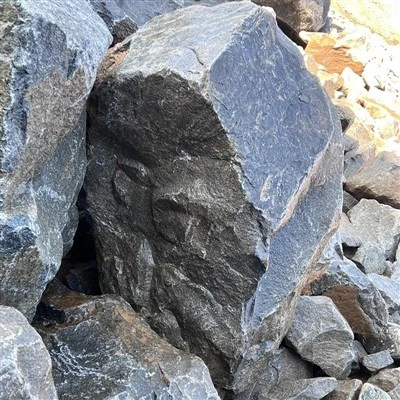
If you’re planning a project and want a custom quote – no pressure, just straight talk – hit us up to chat through your needs. We can send sample panels so you can see and feel the difference, answer any questions you have about installation or pricing, and help you figure out what’s gonna work best for your space and budget. Don’t overpay for rock that’s heavy, hard to install, and expensive to maintain – let’s get you the look you want without the headaches.
Landscape Boulders References
- Landscaping Network. (2023). Natural Stone vs. Manufactured Stone: Cost and Installation Comparison.
- International Masonry Institute. (2022). Labor Cost Trends for Residential Stone Installation.
- American Society of Landscape Architects. (2023). Low-Maintenance Hardscaping Material Guide.
- Construction Materials Recycling Association. (2022). Construction Waste Disposal Costs for Residential Projects.
- National Association of Home Builders. (2023). Exterior Finishing Material Durability Ratings.
Xinglong Landscape Greening Co., Ltd.
We are one of the most professional faux rock manufacturers and suppliers in China, also support customized service. We warmly welcome you to wholesale bulk high quality faux rock in stock here from our factory. If you have any enquiry about pricelist, please feel free to email us.
Address: Xiaoluli Natural Village, Wutongshan Village, Meishan Town, Changxing County, Huzhou City, Zhejiang Province
E-mail: 18667092034@163.com
WebSite: https://www.xinglonggreen.com/
