Hey everyone, if you’ve ever worked with MDF, you know how frustrating it can be to mix up different boards mid-project. Last week, a regular customer hit me up panicking—they’d grabbed two MDF sheets for a cabinet build, but one was the water-resistant kind and the regular stuff, and by the time they noticed, half the cuts were already done. Total waste of time and material, y’know? That’s when I realized a lot of folks (and even some smaller shops) sleep on simple labeling systems for MDF. As someone who’s been supplying MDF for over 8 years, I’ve tested a bunch of methods that actually work, and today I’m breaking down how to label MDF so you never have that “wait, which one is this?” nightmare again. MDF
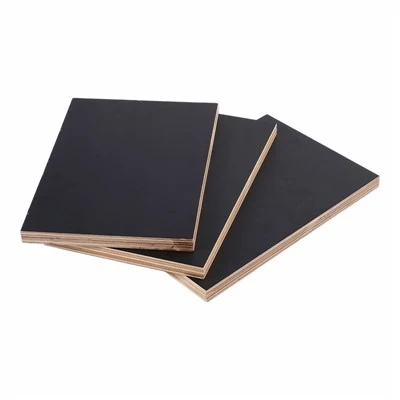
First off, let’s get real: MDF isn’t one-size-fits-all. You’ve got regular MDF for indoor furniture, moisture-resistant (MDF-H2F) for bathrooms or kitchens, fire-rated MDF for commercial spaces, maybe even decorative MDF with a melamine top. If you don’t label those right, you’re either using the wrong board (hello, warped cabinet in a month) or wasting money on extra trips to the store to grab the right one. I’ve seen guys mark MDF with a Sharpie and call it a day, but Sharpie smudges if you’re cutting near a water hose, and it fades fast. Spray paint works but it’s messy, especially if you’re stacking 10 sheets at a time. The key is labeling that’s easy to spot, doesn’t damage the board, and stays put until you’re ready to cut.
Let’s start with the basics: what you actually need to label, because writing “MDF” isn’t enough. I always tell my team to make sure every label has 5 quick details: grade (regular, MR, fire-rated), thickness (18mm, 12mm, whatever), quantity in the stack, batch number (trust me, this saves you if there’s a manufacturing glitch), and supplier tag (but that’s just for us, the suppliers). Wait, batch number—why’s that matter? Last year we had a run of MR MDF that had a tiny resin flaw, and a customer who’d labeled their stacks by batch was able to pull only the bad ones without wasting their entire inventory. No more tossing 50 sheets because one had a defect. That’s a game-changer.
Now, the labeling methods I’ve found actually work, no fancy gear needed. Let’s start with the go-to: pre-printed stickers. I don’t mean the cheap dollar-store ones that fall off, I mean heavy-duty, waterproof vinyl stickers. We make our own for our customers—they have our logo, grade, thickness, and batch number printed right on them. Here’s the pro tip: don’t stick one per sheet. Stick a set of 3 on the stack? wait, top left corner, top right, and the side edge. Because if you stack 20 sheets, the top ones get flipped, and the side ones are hidden if you stack against a wall. Three spots mean you’ll see the label no matter how you pull a sheet. Also, use a matte sticker, not glossy—glossy can blend in with the MDF’s smooth finish. And avoid stickers with a super adhesive glue, because when you peel it off later, it might leave a residue that’s hard to sand off. We test our stickers by leaving them on MDF for 6 months, then peeling—zero residue every time.
Another method that’s low-effort: stencils + paint markers. If you’re dealing with a big batch and don’t have custom stickers, stencils are your BFF. I bought a cheap set of 1-inch stencils (or you can print your own on cardstock and cut ‘em) and use a paint pen that’s oil-based, not water-based. Water-based smudges, oil-based stays on even if the board gets damp. Here’s the trick: don’t write directly on the face of the MDF that’s getting cut—write on the back edge or the side that’s going to be inside a cabinet frame. Why? If you’re sanding or painting the face later, the label would get covered, but if it’s on the hidden edge, you can still check it when you pull a sheet. I’ve seen guys write on the face, and then they sand it off and wonder why their “18mm regular” is now just a random board. Don’t do that. Oh, and use bold, block letters—no cursive, because you’ll squint at it when you’re in a hurry. I’ve had customers tell me cursive labels looked cool, but they’d misread “MR” as “M” and grab the wrong board. Save the fancy handwriting for your journal, not MDF labels.
Wait, what about digital labeling? A lot of big shops use QR codes, right? I tried that for a few months, and let’s be honest—sometimes the QR code gets smudged, or you forget your phone, or the battery dies. But if you combine a small QR code with a big bold label, it works. The QR code can link to the product spec sheet (like “this is MR MDF, max moisture exposure is 70% humidity” or whatever) so you don’t have to Google it mid-project. But don’t rely solely on the QR code. I once had a customer who only used QR codes, and when his phone died, he spent 20 minutes holding it up to 3 stacks to scan each one. Annoying. So QR is a bonus, not the main label.
Now, what to avoid? Let’s list the mistakes I see all the time. First, don’t use masking tape + a regular Sharpie. Masking tape falls off when you’re moving stacks, and Sharpie on MDF can bleed into the grain when you cut it, making it hard to sand. Second, don’t label only the top sheet of a stack. If someone pulls the 5th sheet, you have no idea what it is. Third, don’t use labels that are the same color as your MDF. We have white, beige, and gray MDF sometimes—if your sticker is white, you’ll miss it. Use high-contrast colors: black text on white sticker, or white text on black, something that pops. Fourth, don’t forget to update labels when you move sheets. If you take 5 sheets from a 20-sheet stack to cut, add a new label to the remaining 15 that says “15 left, batch 123, MR”. That’s another mistake I see—people move sheets and don’t relabel the new stack, so a few days later they have a half-stack with no label.
Wait, let’s talk about specific use cases because labeling changes a little depending on what you’re using the MDF for. If you’re a DIYer working on a small project, you don’t need to overcomplicate it. Grab some $2 vinyl stickers from a hardware store, write the key details, stick ‘em on 2 sides, and you’re good. If you’re a cabinet maker with a shop, invest in custom pre-printed stickers or a stencil kit—saves you so much time sorting through stacks. If you’re dealing with commercial projects, add the fire rating code to the label—someone inspecting the job will need that, so having it right on the MDF means no delays. I had a customer who missed the fire rating on a stack last year, and the inspector made him pull 10 sheets, causing a 2-day delay. That’s the kind of thing you can avoid with a 1-second label check.
Oh, and here’s a pro tip from the trenches: when you unload a shipment of MDF, label the stacks right then, before you even move them. The delivery truck driver is already there, so you can just grab your stickers, mark the stacks, and go. If you wait until later, you’ll get busy and forget, and end up with unlabeled stacks a week later. We even include a free sheet of our custom stickers with every MDF shipment for that exact reason—no excuses.
Wait, let’s address a common question: does labeling damage MDF? I get this all the time from carpenters who worry about residue or marks affecting the finish. If you use the right stickers (heavy-duty vinyl with low-adhesion glue) and don’t write on the face side (the one you’re painting or veneering), no, it doesn’t. I’ve never had a customer complain about label residue, and we’ve tested this on thousands of sheets. If you’re using paint markers, just let them dry for 24 hours before sanding—oil-based paint doesn’t smear, so it won’t get on your sandpaper. If you write on the back edge, you’ll never even see it, let alone have it affect the finish.
Let me tell you a story that drove this home. A few months back, a small furniture maker came to us with 20 sheets of MDF for a line of bathroom vanities. They’d mixed up regular MDF and MR MDF, and 12 sheets had warped within 2 weeks of installation. That was $1,200 in wasted material, plus the cost to replace the vanities. Now, he uses our stickers on every stack, and he says he hasn’t had a mix-up since. It’s not just about saving material—it’s about saving your reputation with customers, too. If a vanity warps because you used the wrong board, that’s a bad review, no matter how good your craftsmanship is.
Now, how to put this all together into a simple system that takes 10 seconds per stack. Let’s make it step by step, no jargon:
- As soon as your MDF arrives, split it into stacks by grade (regular, MR, fire-rated) first. Don’t mix grades—this is the first line of defense against mix-ups.
- Grab 3 heavy-duty stickers per stack. Write/print on each: grade, thickness, batch number.
- Stick one on the top left, one on the top right, one on the side edge of the stack.
- If you move sheets from a stack, make a new label for the remaining amount and stick it on the new stack.
- Bonus: if you want, add a small QR code with the product spec sheet, but don’t skip the bold text.
That’s it. No fancy software, no expensive tools, just 10 seconds per stack. I’ve seen shops that did this go from 1 mix-up a week to zero, and their material waste dropped by 15%—that’s real money back in their pockets.
Now, I know some of you will have your own methods, and that’s cool too. But if you’re still using Sharpie on masking tape, or only labeling the top sheet, give this a shot. It’s way simpler than you think, and it’ll save you so much headaches down the line.

If you’re working on a big project, or you need consistent, labeled MDF for your shop, hit us up to chat about your needs. We can even customize labels for your specific grades and projects, so you don’t have to mess with making your own. Whether you’re a DIYer with a home garage or a cabinet builder with 5 employees, we’ve got MDF that’s suited for your project, and labeling tips to make your workflow way smoother. Don’t let mix-ups derail your next build—reach out today to talk through what you need.
F17 Standard CD Structural Plywood References:
- Wood Industry Journal. (2022). Best Practices for Material Identification in Woodworking Shops.
- National Wood Flooring Association. (2021). Labeling Materials to Prevent Misuse and Waste.
- Composite Wood Products Association. (2023). Guide to MDF Grades and Proper Handling.
Shandong Rogge Wood Industry Co., Ltd.
Address: No.1 Road, Jinyang Village, Huyang Town, Felxlan County, Linyi City, Shandong China.
E-mail: sales@roggewood.com
WebSite: https://www.roggewood.com/
