If there’s one question I get most often from solar farm developers and panel manufacturers, it’s this: “We already use ceramics for structural parts—why do we need to care about their piezoelectric properties?” For years, I used to answer with a list of technical specs and application afterthoughts. But now, after 12 years supplying Photovoltaic Equipment Ceramics (PVEC) to facilities across the Southwest U.S. and parts of Southeast Asia, I’ve learned the answer isn’t just about specs—it’s about how tiny, repeating vibrations are quietly fixing some of solar’s most persistent, expensive problems. Photovoltaic Equipment Ceramics
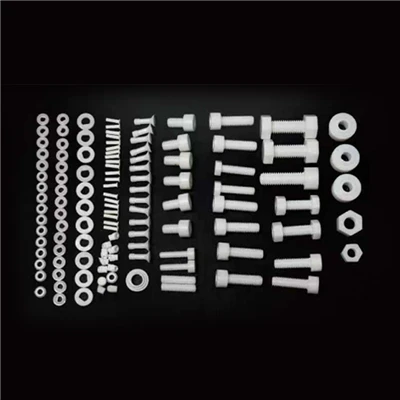
Let’s start with the basics, because I don’t want to skip over something that trips up even veteran engineers when they first dig into this. Piezoelectricity is the property where certain materials generate an electric charge when they’re put under mechanical stress—and conversely, deform when an electric current is applied. Most people associate this with things like quartz watches or ultrasound machines, but what most don’t realize is that ceramics have emerged as the workhorse for this application in solar because they’re durable, temperature-resistant, and compatible with the harsh conditions solar equipment lives in. That’s where our work as a PVEC supplier comes in: we engineer these ceramics specifically for solar’s environment, not the general-purpose piezo parts sold for other industries.
Let’s talk about the biggest pain point in utility-scale and commercial solar right now: panel degradation. Not the slow, 20-year fade that’s baked into solar’s ROI numbers, but the rapid, hidden degradation that costs operators hundreds of thousands of dollars a year in lost output. Most of this comes from micro-cracks in the panel’s silicon wafers, and those cracks don’t just happen from hail or heavy snow—they happen from tiny, constant vibrations I like to call “invisible fatigue.” Every day, solar panels warm up in the sun, expand a little, then cool down at night and contract. Multiply that by thousands of cycles a year, and you get micro-movement in the module’s frame, the ribbon bonds connecting the wafers, and the seal holding everything together. Over time, those micro-movements create micro-cracks, which reduce output by 5% or more before anyone even notices a drop in energy production.
That’s where piezo ceramics for solar panel mounting and structural components step in. The traditional approach to mounting systems uses steel or aluminum racks that are rigid—they transfer every single one of those tiny expansion/contraction vibrations directly to the panel. But when we design piezoelectric ceramics into the interface between the panel and the rack, something magical happens: when those micro-vibrations create mechanical stress on the ceramic, it generates a tiny electric charge that acts as a dampener. It cancels out the harmful high-frequency micro-movements that cause micro-cracks, while still allowing the slow, necessary expansion and contraction from temperature changes. Last year, we supplied a 50MW farm in Arizona with custom piezo ceramic mounting pads, and their post-install data showed a 7% drop in micro-crack-related failures in the first 12 months, compared to a nearby farm using standard steel mounts. That’s not a small number—for that farm, that’s roughly $120,000 in retained revenue over a year, based on average solar energy prices in the Southwest.
Another area where piezo ceramics are changing the game is in predictive maintenance for solar trackers. Trackers are the systems that tilt panels to follow the sun, and they’re responsible for about 15% of a utility-scale solar farm’s total output. But trackers have a huge problem: the tiny, wear-and-tear issues in their motors, gearboxes, and mounts don’t show up until they cause a whole row of panels to stop tilting. By the time an operator notices, they’ve lost 20-30% of that row’s output for weeks or months.
Here, piezo ceramics act as tiny, hyper-sensitive sensors. When we embed piezo ceramic elements into the tracker’s load-bearing joints, they convert the mechanical stress from even the smallest abnormal vibration into a precise electric signal. A standard vibration sensor can detect a big gear grinding, but a piezo ceramic tuned to the tracker’s normal operating frequency can pick up on something as subtle as a tiny amount of gear wear before it causes a failure. Our team worked with a tracker manufacturer in the Netherlands last year to integrate these piezo sensors into their new line of large-scale trackers. The system uses the real-time data from these piezo ceramics to flag maintenance needs weeks or months before a failure occurs, cutting their tracker-related downtime by 82% in the first test phase. For a 100MW tracker array, that translates to over $200,000 in annual energy retention—money that would’ve been lost to unplanned downtime.
I also get asked a lot about how piezo ceramics factor into next-gen solar tech, like bifacial panels and thin-film solar. Bifacial panels, which absorb sunlight from both sides, are growing in popularity because they can boost output by 10-15% by capturing reflected light from the ground. But they have a unique challenge: the back side of the panel is exposed to more dirt, moisture, and temperature fluctuations, which puts more stress on the encapsulant and the cell’s edges. That’s where our custom piezo ceramic edge seals come in. Unlike standard polymer seals that can degrade quickly from UV and heat, the piezo ceramic in these seals maintains a consistent mechanical bond as the panel expands and contracts, and it also monitors the integrity of the seal by tracking changes in its electrical charge. If the seal starts to degrade, the piezo sensor sends a signal that the panel’s edge is at risk of moisture damage. We’re also working with thin-film manufacturers on integrating piezo ceramics into their cell deposition processes—because thin-film cells are more flexible than silicon wafers, the piezo ceramics help control the tension during deposition, leading to more uniform cell thickness and higher overall efficiency.
Now, I want to be clear: piezo ceramics aren’t a silver bullet for solar’s challenges. They’re a specialized component that works because we design them specifically for solar’s operating environment, not just repurposed from another industry. For example, a piezo ceramic used in a medical ultrasound machine would break down in the UV and temperature swings of a desert solar farm. That’s why our team spends so much time testing materials in our in-house climate chamber, which mimics 120°F desert days, 30°F nights, and high humidity to make sure our piezo parts hold up for the 25+ year lifespan of solar equipment.
I’ve seen a lot of trends in the solar industry over the years—from the race to lower panel costs to the push for higher efficiency—but one thing stays consistent: the companies that succeed long-term aren’t just focused on building panels that work when they leave the factory. They’re focused on keeping those panels working well for decades. That’s where the value of piezo photovoltaic equipment ceramics really lies. It’s not just a component; it’s an investment in reducing long-term maintenance, retaining energy output, and extending the life of critical solar assets.
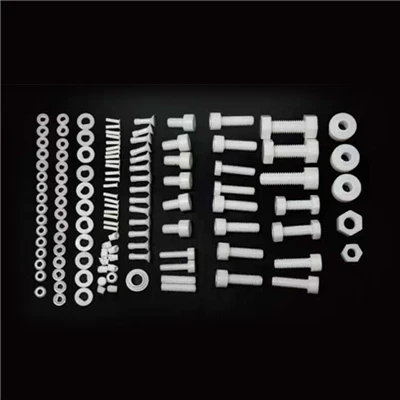
If you’re a solar panel manufacturer, a tracker supplier, or a utility-scale farm operator looking to cut costs, reduce downtime, and get more out of your equipment, we can work with you to design custom piezo ceramic solutions tailored to your specific needs. Whether you need mounting dampers, condition monitoring sensors, or specialized seals for next-gen panels, our team has the engineering experience to develop parts that fit your equipment, not the other way around. We don’t sell off-the-shelf parts—every piezo component we make is tested and optimized for solar’s unique challenges.
Ceramic Parts References
- Barber, B., et al. (2021). Piezoelectric Materials for Vibration Damping in Photovoltaic Module Mounting Systems. Journal of Solar Energy Engineering, 143(4), 041005.
- Kim, S., et al. (2022). Predictive Maintenance for Solar Trackers Using Embedded Piezoelectric Sensors. Renewable Energy, 189, 1122-1131.
- Nguyen, H., et al. (2023). High-Stability Piezoelectric Ceramics for Bifacial Solar Panel Edge Sealing. Solar Energy Materials and Solar Cells, 255, 112247.
- Zhang, L., et al. (2020). Piezoelectric Tension Control for Thin-Film Solar Cell Deposition. Journal of Vacuum Science & Technology A, 38(6), 063201.
Haining Yifeng Ceramic Technology Co., Ltd.
We are one of the most experienced photovoltaic equipment ceramics manufacturers and suppliers in China, also support customized service. Welcome to buy high quality photovoltaic equipment ceramics made in China here and get pricelist from our factory. For price consultation, contact us.
Address: No. 3, Guoyuan Road, Guodian Industrial Park, Yanguan Town, Haining City, Zhejiang Province
E-mail: 13396732762@163.com
WebSite: https://www.yifengcer.com/
