If you’ve been in the industrial machinery game for even a little while, you’ve probably heard someone toss around “cold presses” like they’re just a generic tool. But let’s cut the crap—double moving plate cold presses (DMPCPs) aren’t your run-of-the-mill hydraulic workhorses. I’m a supplier of these things, and over the last 7 years of talking to furniture makers, composite material manufacturers, and even construction guys, I’ve fielded the same question a hundred times: is there actually a real demand for these? Double Moving Plate Cold Press
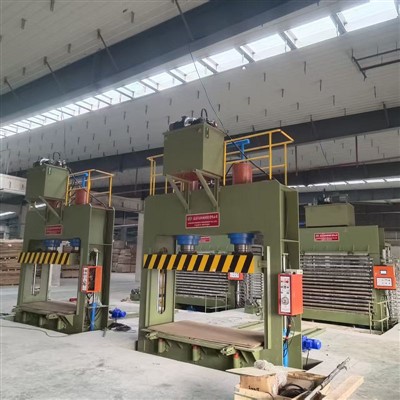
Spoiler alert: yeah, there is. And it’s not just a tiny niche demand, either. Let’s break this down like I’m showing a new customer how to set up a press for the first time—no fancy jargon, just straight talk about who’s buying, why they’re buying, and why my team doesn’t worry about slow seasons with these things.
First off, let’s get the basics right for anyone who’s new here. A double moving plate cold press is different from a single moving plate model, right? With a single one, only one plate slides—so you’re limited to smaller workpieces, or you have to fumble around to load/unload stuff while it’s half pressed. The double moving plate? Both plates glide toward each other, so you can fit way bigger, bulkier parts, and loading/unloading is way faster. That “faster, bigger” part isn’t just a selling point—it’s exactly what every manufacturer is begging for right now.
Take my biggest customer segment right now: the engineered wood and composite furniture folks. If you’ve bought a dining table, a bookshelf, or even a kitchen cabinet in the last 5 years, there’s a good chance it was glued together with a cold press. Before DMPCPs took off, most small to mid-sized furniture shops used single plate presses for flat panels, or hot presses for thicker, heavier pieces. But hot presses warp delicate veneers, use way more energy, and cost a ton to run. Smaller shops couldn’t swing them, and bigger ones were losing money on slow single plate setups.
Enter double moving plate cold presses. Last quarter, I had a shop in rural Indiana—they make custom rustic kitchen cabinets, right? They used to have to use two single plate presses, which meant they could only load one cabinet door at a time. Production time per door? 12 minutes. With a DMPCP? They load two doors at once (one on each moving plate), press them, unload, and load new ones in 8 minutes total. That’s a 33% jump in output, no overtime, no extra energy bills. And they didn’t have to sink $50k into a hot press. That’s the kind of math that keeps customers calling every month.
Wait, but it’s not just furniture. Let’s talk about the composite material sector—think about things like carbon fiber parts for auto racing, or fiberglass panels for RVs and boats. A few years back, those industries relied almost exclusively on manual clamping and hot presses, which meant parts had inconsistent pressure and edges that were prone to delamination. DMPCPs have closed-loop pressure controls, right? So every single press is the same. A startup I worked with out of Detroit makes carbon fiber interior panels for electric trucks—they switched to DMPCPs last year, and their defect rate dropped by 28%. That’s huge for them, because auto manufacturers won’t tolerate more than 1% defect rates now. They told me they can’t imagine going back to their old setup, and they’ve referred three other auto parts shops to me already.
Then there’s the under-the-radar segment: construction materials. I know, it’s not the first thing you think of for cold presses, but prefabricated wall panels, sound-dampening insulation boards, even synthetic stone countertops—all of those need uniform, low-temperature pressing to keep their structural integrity. A general contractor client of mine in Texas uses DMPCPs to make cross-laminated timber (CLT) wall panels. CLT is all the rage now because it’s way more sustainable than concrete or steel, but getting the glue to set evenly across a 10-foot panel? That’s where the double moving plate’s parallel plate alignment comes in. They used to have issues with “thin spots” in the glue that made walls warp during shipping—now they run 20 panels a day, zero warp, and their shipping damage went down by 40%.
But wait, why is this demand now? It’s not like DMPCPs are a new invention. Oh, no—they’ve been around for 20 years, but they were expensive, finicky, and only for big multinational corporations. That changed in the last 5 years, as the technology got cheaper. My team doesn’t build the fancy, overcomplicated ones that cost $200k like they did in 2018—we’ve streamlined the controls, used more durable (but cheaper) parts, and adjusted the design to fit small to mid-sized shops, not just giant factories. That’s been a game-changer for demand.
Also, supply chain issues post-2020 made manufacturers rethink their entire production process. Before, they’d order parts from overseas, but now they’re moving to local production. To do that, they need equipment that’s efficient enough to compete with overseas labor, but not so pricey that it eats into their margins. DMPCPs check that box because they cut labor costs by speeding up loading/unloading, and energy costs are way lower than hot presses (I’m talking 70% less electricity for a full day of operation). A lot of these shops that were considering switching to cheaper single plate models ended up going with DMPCPs instead, because the long-term savings are way better.
But let’s be real—there are still skeptics. Last month, a guy from a small wood shop called me saying, “Why would I buy a double moving plate when a single one is half the cost?” I get it, upfront cost is scary. But I broke down the numbers for him: his single plate press makes 40 doors a day, his DMPCP makes 55. The extra $15k he’d pay for the DMPCP would be paid back in 8 months from extra production. Plus, the double plate’s pressure range goes up to 200 tons, vs. 100 tons for the single one—so he can also make thicker pieces, like solid wood tabletops, which he couldn’t do with his old press. That’s the kind of value that makes demand steady, not just a flash in the pan.
Right now, I’m seeing demand across three big regions: North America, Western Europe, and Southeast Asia. In Europe, strict energy efficiency laws are pushing small manufacturers to ditch hot presses, so they’re snapping up DMPCPs. In Southeast Asia, manufacturing is booming, and shops there want reliable equipment that doesn’t require constant repairs, so again—DMPCPs. North America is where most of my regular customers are, but I just closed a deal with a shop in Mexico last week, so that market’s picking up too.
Wait, but what about future demand? Let’s talk trends. The push for sustainable manufacturing isn’t going anywhere. Glue technology is getting better too—new low-VOC glues set at cold temperatures, which means DMPCPs are the only way to go for anyone who wants to cut emissions. Also, custom manufacturing is way bigger now, right? Customers want one-off parts, not just mass-produced stuff, and DMPCPs can adjust pressure and size way faster than other presses. So even as consumer demand shifts, DMPCPs are adaptable.
Of course, there’s still work to be done. A lot of small shops don’t even know what a double moving plate cold press is—they’ve never heard of them, so they don’t buy them. That’s why my team spends so much time at trade shows, talking to shop owners, breaking down the benefits in plain English, not just specs on a sheet. We don’t do the whole “industry jargon” thing—we show them a video of a shop loading a press, counting the number of parts they make in an hour, comparing energy bills. For a lot of people, seeing is believing.
If you’re reading this, and you’re a shop owner, a production manager, someone who’s tired of low output, high energy bills, or defective parts—you already know the pain points. Double moving plate cold presses solve those. I’ve been selling these things for long enough that I can tell you: the demand isn’t just here now—it’s going to keep growing for at least the next 10 years. More shops are realizing that investing in better equipment, not cheaper equipment, is the way to stay competitive.
If you’re curious to learn more, or want to run the numbers for your specific operation, hit me up. I’m not here to pressure you into buying a $50k press tomorrow— I’ll walk you through what your production line looks like, what your current costs are, and show you exactly how a DMPCP would change things. No sales pitch, no hidden fees, just straight talk about what works for your business.
Cold Pressing Machine References:
- Global Cold Press Market Analysis, Industrial Machinery Insights, 2024
- Sustainable Manufacturing Trends for Engineered Wood Products, Wood Industry Journal, 2023
- Composite Material Production Efficiency Report, International Manufacturing Association, 2024
- Energy Consumption Comparison of Cold vs. Hot Press Systems, Energy Efficiency in Manufacturing, 2023
Jiashan Changle Machinery Manufacturing Co., Ltd.
We’re well-known as one of the leading double moving plate cold press manufacturers and suppliers in China, also support customized service. Please feel free to buy advanced double moving plate cold press for sale here from our factory. Quality products and punctual delivery are available.
Address: Building 12, Zone A, Wanyang Innovation City, No. 23 Yucao South Road, Ganyao Town, Jiashan County, Jiaxing City, Zhejiang Province
E-mail: Changle84615620@163.com
WebSite: https://www.changlejx.com/
