If you’ve ever stood in a substation or glanced at the grey box that powers a residential neighborhood, the low-voltage transformer hiding on that pole or in that concrete vault is a miracle of quiet engineering. Most people look at it and see a solid, unchanging piece of metal, but inside, it’s a system that breathes—and that breath comes straight from the oil conservator. As someone who’s spent the last 12 years as an oil conservator supplier, I’ve answered a hundred times the same question: How does that small, seemingly insignificant part keep the whole transformer running for 20, 30, even 40 years? It’s not magic; it’s about managing a problem that would break a transformer faster than any lightning strike or power surge: thermal expansion. Oil Conservator In Transformer
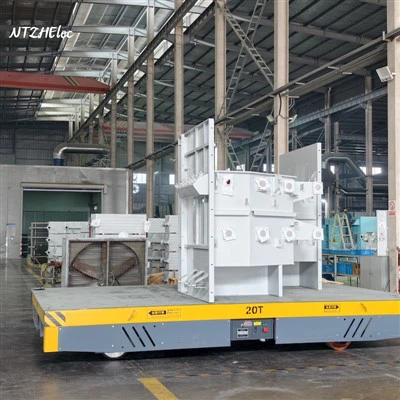
Let’s start with the basics of how a low-voltage transformer works, because the conservator can’t be explained in a vacuum. When a transformer steps down high-voltage electricity for homes and businesses, energy isn’t free. The copper windings inside the core resist the flow of current, and that resistance turns into heat. A 100kVA low-voltage transformer might run at 80°C on a hot summer day, but if demand spikes—say, everyone in a neighborhood turns on their AC at 3 p.m.—that temperature can climb to 105°C or higher. Even on cold winter nights, when load drops, the transformer cools down. That constant cycle of heating and cooling doesn’t just affect the copper windings; it affects the insulating oil that fills the transformer’s main tank.
Transformer oil isn’t like the oil in your car. It’s a highly refined, mineral-based (sometimes synthetic) fluid designed to do two jobs: insulate the electrical windings so current doesn’t jump where it shouldn’t, and carry heat away from the core and windings to the cooling fins or radiator on the side of the transformer. And just like any liquid, it expands when it gets hot and contracts when it gets cold. If there was nowhere for that expanding oil to go, the main tank would develop pressure, push on gaskets, crack welds, or even rupture entirely. Conversely, if the oil contracts so much that it pulls away from the top of the windings, air would get in. That air has moisture and oxygen, two enemies of transformer life: moisture degrades insulation, and oxygen causes oil to oxidize into sludge that clogs cooling passages and insulates poorly.
That’s exactly where the oil conservator comes in. Think of it as a buffer tank, mounted on top of the main transformer, connected to the main tank by a pipe. The entire system is closed—no open air, no direct contact between the conservator’s oil and the outside environment. Let’s break down the step-by-step process, from hot load to cold:
On a sweltering July afternoon, the transformer is working its hardest. Heat makes the insulating oil expand. Instead of pressing against the rigid main tank walls, that extra oil flows through the connecting pipe up into the conservator. The conservator is sized to hold that extra volume—for a 250kVA low-voltage transformer, that might be a 50-gallon conservator, enough to accommodate 10% expansion of the total oil volume. As the oil cools later that night, it shrinks back down, and the oil flows back into the main tank, not leaving a gap in the conservator. Wait, but what about air? You might be wondering—if the conservator is empty sometimes, what fills the space where the oil was? Here’s the clever part: most modern conservators are equipped with a rubber diaphragm or a bladder, a flexible barrier that separates the oil inside the conservator from the air outside. When the oil expands into the conservator, it pushes the diaphragm out, compressing the air on the other side. When the oil contracts, the diaphragm pulls back, and the space that was filled with oil is replaced by air—but it’s dry, filtered air, not the moist, dirty air from the street. The filter is a desiccant breather, usually filled with silica gel, that absorbs moisture before it can get past the diaphragm. That means the transformer’s oil never comes into contact with ambient air, preventing oxidation and moisture damage.
I’ve seen too many transformers over the years that skipped this part. A few years back, a small municipal utility called me because a bank of 15 low-voltage transformers they’d installed three years prior was failing at a rate of two a year. When we opened one up, the oil was thick, black, and full of sludge. Turns out, they’d tried to save money by using a transformer without a conservator, just a sealed main tank. The first summer, the pressure cracked a weld; the next winter, air got in, and the oil oxidized. By year three, those transformers were beyond repair. A conservator isn’t an unnecessary expense—it’s the part that makes the rest of the transformer’s long lifespan possible.
Let’s talk about the specific considerations that matter for low-voltage transformers, because conservators aren’t one-size-fits-all. Low-voltage transformers (usually 600V or less, for distribution) are smaller than high-voltage units, so their conservators are smaller, too. They’re often installed outside, on poles or in small concrete vaults, so the conservator has to withstand extreme temperatures, UV light, and sometimes small animals or debris. A good conservator for a low-voltage transformer has to be made of corrosion-resistant steel, with a properly sized breather that works in temperatures from -40°F to 120°F, no cracking, no leaks. We test every conservator we ship by pressurizing it to 15 PSI and holding it for 24 hours—if there’s even a 0.1 PSI drop, we scrap it. Small defects in a conservator turn into big failures down the line.
Another thing I always explain to customers: the conservator also helps with maintenance. When a technician needs to test the oil’s dielectric strength (a key measure of its insulating ability) or take a sample, they don’t have to drain the entire main tank. They can access the sample valve on the conservator, which holds a small, representative sample of the oil—no disruption to the transformer’s operation. And if the transformer needs to be topped off with oil, you don’t have to deal with the air in the main tank; you just add oil to the conservator, and it flows down as needed. That cuts maintenance time in half, which is a big deal for utilities that have hundreds of transformers to monitor.
I’ve been in this business long enough to see trends change. Ten years ago, almost every conservator used a diaphragm design, but now we’re also making bladder-type conservators for older transformers that need a retrofit. Bladders are easier to replace without draining the whole tank, which saves utilities thousands in downtime. We also work with companies that specialize in green energy, because low-voltage transformers are a big part of solar and wind farms. Those transformers have variable loads, sometimes ramping up and down multiple times a day, so their conservators have to be even more responsive to rapid temperature changes. That’s why we tailor the size and type of conservator to the specific application, not just sell a one-size-fits-all part.
A common misconception, especially among small utilities or building managers who don’t work with transformers every day, is that the conservator is just a “side tank” that’s easy to ignore. I’ve had customers tell me, “Well, the transformer works without it, right?” And yes, it might work for a year or two, but it’s a ticking time bomb. The transformer’s insulation has to stay dry and clean; if moisture gets in, you can get a partial discharge, which eats away at the windings over time. I’ve seen transformers that had conservators neglected—their desiccant breathers were so saturated with moisture they turned from blue to pink, which is the sign they need to be replaced. Just replacing the breather can add years to a transformer’s life, and it’s way cheaper than replacing the whole transformer.
Let me also clear up a confusion between conservators and other parts of the transformer cooling system. Low-voltage transformers use two main cooling methods: AN (air natural) and AN/AF (air forced). The conservator works with both, but it’s separate from the cooling fins or radiators. The conservator’s job isn’t to cool the oil—it’s to store the oil that expands when it heats up, keep air out, and keep the oil clean. The cooling fins move heat away from the oil, while the conservator ensures the oil can move freely between the tank and the fins as needed. They’re a team, not competing parts.
So, putting it all together: the oil conservator is a simple, smart solution to a fundamental problem. It turns the transformer’s biggest enemy—thermal expansion and contraction—into a manageable cycle. It keeps air and moisture out, which protects the oil and the windings. It makes maintenance easier, and it extends the transformer’s lifespan by decades. For a low-voltage transformer, which is the backbone of residential and commercial power distribution, that small part is worth its weight in copper.
If you’re a utility manager, a electrical contractor, or a building owner looking to replace a worn conservator for your low-voltage transformers, or if you’re specifying new equipment and need a reliable partner for consistent, tested conservators, let’s talk. We’ve worked with small local utilities and large national power companies alike, and we can customize a solution that fits your equipment and budget. Don’t wait until a transformer fails—reach out now to get a consultation and a quote tailored to your needs.
Power Transformer Oil Tank References
- IEEE Standard C57.12.00, Standard for General Requirements for Liquid-Immersed Distribution, Power, and Regulating Transformers
- Transformer Oil Conservators: Design, Operation, and Maintenance, Electric Power Research Institute (EPRI), 2019
- “Thermal Expansion Characteristics of Mineral Insulating Oils for Power Transformers,” Journal of Electrical Insulation and Dielectric Phenomena, 2021
Nantong Zhihe Electric Co., Ltd.
As one of the most professional oil conservator in transformer manufacturers and suppliers in China, we’re featured by quality products and low price. Please rest assured to wholesale cheap oil conservator in transformer made in China here from our factory. Customized orders are welcome.
Address: NO.202 Jianghai West Road, Hai’an Town, Hai’an City, Jiangsu Province
E-mail: colt.ntzh@gmail.com
WebSite: https://www.ntzhelectric.com/
