Hey everyone, thanks for stopping by my corner of the internet. I’m Jake, and I’ve been running a vault door supplier for about 12 years now—way back when most people still thought vaults were only for banks and old museum display cases, not for small business storage facilities or even high-end residential wine cellars. One question I get asked constantly is: “Can vault doors be opened remotely these days?” The short answer is… yeah, they can, but there’s a lot more to it than just typing a code into an app. And if you’re here because you’re worried about security, not just convenience, let me tell you—we don’t cut corners here. Vault Door
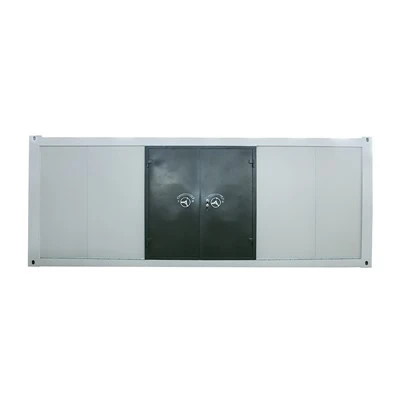
First, let’s get something straight. When people hear “remote vault door,” they usually picture that stuff from heist movies: a guy in a van across town tapping his phone, and the whole heavy steel door just slides open like a garage door. Sorry, that’s not real. Not for actual vault doors, anyway. The kind we supply are rated—they have to be, by organizations like Underwriters Laboratories (UL) or the National Fire Protection Association (NFPA)—so they can withstand hours of drills, explosives, and brute force. You can’t make that kind of thing hackable on a whim. But modern tech has come a long way, so “remote” these days is way more nuanced than just opening the door from another room. It’s about managing access, and that’s where the magic (the good kind) happens.
Let me walk you through how it works, because I deal with this every single day for clients. A few years back, we were working with a small biotech firm that stores sensitive research samples. Their old vault was a 1970s model with a combination dial—someone always had to be there to unlock it, and if they were running late from a meeting, the whole team was stuck outside. They came to us saying they needed something that could let their lab manager unlock it even if they were at home prepping for a big trial, but they couldn’t risk a breach. So we installed a UL-rated vault door with a two-factor remote access system, not a one-click “open anything” app. Here’s how that works: first, there’s a local control panel on the door itself—still the physical combination or a biometric scanner (fingerprint, palm print) that only works if you’re standing right there. Then, we link that panel to a cloud-based management platform, but with end-to-end encryption. That means when someone sends a remote unlock request, it’s not just floating around the internet for anyone to grab. It gets authenticated first—like, the lab manager has to enter a unique PIN into their phone and that request has to be flagged as coming from an approved IP address or device. No sketchy random IP can send a request.
Wait, but what about opening the door from across the country? Is that even possible? Technically, yes, but that’s a niche use case, and we never set that up for anyone who doesn’t have a rock-solid security team. A few years back, we did a project for a large art collector who travels internationally. They have a vault in their vacation home in Switzerland, and sometimes they need to let a curator in to take a painting to an exhibition in New York. We worked with their security team to set up a time-limited remote access token—so the curator could only unlock the door between 9 AM and 5 PM Swiss time, for that one specific week the painting was being moved. No permanent access, no leftover permissions after that. That’s the sweet spot of remote vault tech: access management, not just opening the door.
Now, let’s talk about the stuff everyone’s worried about: security. I know, I know—if you’re storing something valuable, the last thing you want is someone hacking your vault from their couch. So let’s bust some myths here. First, we don’t use Bluetooth for remote access. Bluetooth has a range of like 30 feet, so that’s more “nearby access” than remote. We use either hardwired Ethernet (super secure, no Wi-Fi to hack) or a cellular connection that’s exclusively for our clients’ vaults. No public Wi-Fi, no shared networks—ever. Second, all our remote access systems are third-party audited. We pay independent companies to test them every year, just like the vault doors themselves. If a hacker can get in, we rip the whole system out and start over. Last year, a client came to us saying they’d heard about some “smart vault” that got hacked on the news. Turns out, that was a residential safe, not a vault door. Big difference. Safes are smaller, less rated, designed for home use. Vault doors have a 6-inch thick steel front, reinforced locking bolts that shoot 2 feet into the frame, and they’re tested to take a beating. You can’t hack that like you hack a $500 home safe.
But wait, there are limits. You can’t open a vault door remotely the same way you unlock your front door. Heavy vault doors need mechanical torque—lots of it. The motors that move those locking bolts don’t run on Wi-Fi signals alone. So when a remote unlock request comes through, it first verifies the user’s identity, sends a signal to the local control panel, which then activates the motor to retract the locks. That motor is 110V, hardwired directly to the vault’s power supply—no wireless connection there. It’s the same kind of motor that moves garage doors, just way bigger and built for strength, not speed. So the “remote” part is just the access control, not the physical operation of the door. That’s a key point I wish more people understood.
Let me give you another real example, because numbers and tech don’t mean anything without a story. A few months back, we worked with a local cannabis dispensary (don’t roll your eyes, they need vaults too—they store product and cash). Their old vault was in the back of the building, and their security system goes offline every time the power goes out. They had a break-in a couple years back when the power went out and the old combination door wouldn’t open, so the security guard couldn’t get in to lock up the front doors. They wanted a vault that had backup power, plus remote access for their store manager if something went wrong after hours. We installed a vault with a 72-hour battery backup (so it works when the power is out), and a remote access system that only lets the store manager unlock it if they send a request and the on-site security camera can confirm it’s them? No, wait, they didn’t need facial recognition—they just needed the access to be time-limited. We set it up so that after 10 PM, no remote unlocks are allowed. Only between 8 AM and 6 PM, the manager can send a request from home if they forgot their keys, or if there’s an emergency at the store. That’s exactly what remote access should be: convenience, not a liability.
Now, I know what some of you are thinking: “What if the internet goes out?” Or “What if the cellular signal is bad?” That’s why we always build in a physical backup. No matter how fancy the remote system is, there’s always a combination dial or a biometric scanner on-site that works without any tech. We never skip that. A vault door’s job is to protect what’s inside, not to rely on internet service. The remote part is an add-on, not the core. So even if the Wi-Fi cuts out, you’re not locked out, and you’re not leaving your vault vulnerable. That’s non-negotiable for us.
I also get a lot of questions about “smart vault doors” vs. “traditional vault doors.” A lot of companies will try to sell you a cheap smart door that doesn’t have the UL rating, and that’s a trap. Just because it has an app doesn’t mean it’s a vault. Our doors are all rated, and the remote access is an optional upgrade, not the whole door. You can have a traditional vault that opens with a dial, and add remote access later if you need it. That’s the beauty of working with a small supplier like me—we don’t push one-size-fits-all. I don’t care if you need a tiny vault for your gun collection, or a 10-foot wide door for a bank’s safe deposit wing. I’ll build the remote access to fit your needs, not the other way around.
Wait, let’s address the elephant in the room: hacking. Is there any way a vault door can be hacked remotely? Let’s be real, nothing is 100% unhackable. But our systems are as close as it gets. We use end-to-end encryption that’s the same as what banks use for online banking. Every access request has a unique, one-time code that expires in 60 seconds. If you don’t use it in that time, it’s useless. We also log every single access attempt—remote or on-site. So if someone tries to send a fake unlock request, we’ll know about it immediately, who it came from, and what device they used. That log gets sent to you via email or text, so you’re always in the loop. Last year, we had a client who noticed a weird access attempt at 2 AM—turns out, a former employee tried to send a request from a phone he still had. The system blocked it, and we disabled his token right away. No breach, no problem. That’s the kind of security we offer.
I think the biggest misconception here is that remote vault access is just about “opening the door.” It’s not. It’s about controlling who can get in, when, and from where. For small business owners, that’s huge. If you run a retail shop and don’t have time to drive to the office just to unlock the vault, that’s a big win. For hospitals storing patient samples, it’s a lifesaver—if a researcher needs to get something after hours, they don’t have to wait for a security guard to show up. For people who collect fine art or jewelry, it’s peace of mind—you can check in on your vault from anywhere, and only grant access to people you trust, for a specific amount of time.
Now, let’s talk about what you should ask for if you’re thinking about remote vault access. First, make sure the door is UL-rated, and the remote system is integrated with that rating. A lot of cheap systems will void the vault’s warranty, which is a huge red flag. Second, ask about the access logs and encryption. Any reputable supplier will be able to show you proof of third-party security audits. Third, ask about backups—power, internet, physical keys, whatever. If the system goes down, you need to be able to get into your vault, no exceptions. Fourth, ask about time limits and permissions. You shouldn’t have a permanent access token for every single employee. Some people only need access during the day, some only need it on specific days. We build that into every system we install.
At the end of the day, remote vault doors aren’t some futuristic gadget. They’re a tool that makes protecting what’s valuable to you easier, without sacrificing security. I’ve seen too many clients get burned by companies that sell them a flashy “smart vault” that’s basically just a big box that can be hacked. That’s not what we do. We build doors that work, and then we add the remote access if you need it—secure, reliable, and tailored to your needs.
If you’re a small business owner, a collector, a hospital administrator, or anyone who needs a vault that works for you, not against you, I’d love to chat. Don’t waste your money on a cheap system that’s going to leave you stressed. Hit me up, and we can walk through what you need, no sales pressure, no fancy jargon. I’ve been doing this for long enough to know what works, and what doesn’t, and I’ll be honest with you every step of the way.
Armory Doors References:
Underwriters Laboratories. (2022). Standard for Safety for Holes in the Floor of Financial Institutions.
National Fire Protection Association. (2021). NFPA 80: Standard for Fire Doors and Other Opening Protectives.
Gartner. (2023). Secure Access Management for Physical Security Systems.
Journal of Physical Security. (2022). Cybersecurity for Vault and Safe Access Control Systems.
Hebei Xinrui Intelligent Technology Development Group Co., Ltd.
With abundant experience, we are one of the most professional vault door manufacturers and suppliers in China. We warmly welcome you to buy high quality vault door at competitive price from our factory. If you have any enquiry about customized service, please feel free to email us.
Address: No.1, Building B, Intelligent Security Industry Park, Economic Development Zone, Wuyi County, Hengshui City, Hebei Province
E-mail: shinraysafe@163.com
WebSite: https://www.shinraysafe.com/
