Hey there, if you’re reading this, you’re probably stuck with a glitchy BLT elevator part right now—like, one that’s making weird noises, not responding to calls, or just plain refusing to work, and you’re not sure if it’s a quick fix or a whole new part. I’ve been on this side of things for 7 years now, as a go-to supplier for BLT elevator parts, so I’ve seen pretty much every headache that comes with this brand. Let’s break down how to troubleshoot common issues step by step, no fancy jargon, just real-world stuff that works. Elevator Parts for BLT

First off, let’s get one thing straight: BLT parts are built to last, but like any machinery, they hate being neglected. Most of the time, problems aren’t actually the part itself—they’re little things that sneak up on you. I’ve had clients panic that their BLT door operator is dead, only to find out a janitor stuck a mop handle in the sensor, or a power spike tripped a tiny breaker. So before you tear anything apart, start with the basics.
Let’s start with the most common pain point: door issues. BLT elevators rely on their door systems to run, so if that’s off, the whole thing’s out of commission. I’ve had a dozen clients call me last month saying their BLT sliding doors won’t close, and 9 times out of 10, it’s not the door motor itself. First, check the safety sensors—those little photo eyes on either side of the door. Sometimes they get covered in dust, condensation, or even a loose piece of tape from a recent maintenance job. Grab a soft cloth, wipe both lenses, and make sure they’re lined up dead straight. If that doesn’t work, check the door tracks for debris. BLT’s door guides run on those slim metal tracks; if something’s stuck—grime, a dropped pen, even a leaf if the elevator’s near a loading dock—the door can’t glide. Just pull it back gently (unplug the power first, okay?) and clear out whatever’s blocking it. If it’s still not moving, maybe the door rollers are worn. BLT uses nylon rollers that hold up, but they do flatten out over time, especially if the elevator runs 24/7. I keep OEM BLT door rollers in stock, and swapping them takes like 10 minutes, no tools fancy enough to need a specialist.
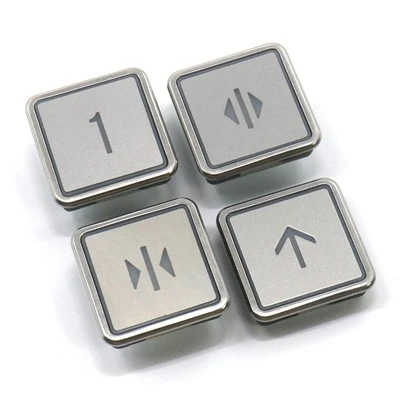
Next up, the control panel. That’s the brain of the whole operation, right? If your BLT elevator is lighting up the wrong buttons, not registering floor calls, or giving error codes (BLT uses a specific set of codes, usually 2 or 3 digits on a small display), don’t panic. First, power cycle it. Wait, not just flipping the light switch—turn off the main breaker for the elevator (it’s usually in the machine room or a utility closet, labeled “BLT elevator main power”). Leave it off for 2 full minutes, that gives all the tiny chips time to reset, then turn it back on. Most of the time, that clears a random glitch from a power blip. If error codes are still there, write them down—don’t guess. I’ve had clients tell me “it’s a code E something” and I can’t narrow it down, but if they say E12, that’s a door lock code, E24 is an encoder issue, and so on. If the control panel buttons feel stuck or unresponsive, it might not be the whole panel—sometimes the contact pads under the button are just dirty. You can pop the button caps off (they twist or pry open gently, no force) and wipe the pads with a cotton swab dipped in isopropyl alcohol. That fixes 30% of button issues I see, no part needed.
Now, let’s talk about mechanical parts that actually wear out, not just glitch. BLT’s traction system—those steel ropes that lift the elevator car—are another common one. If you hear a high-pitched squeal when the elevator moves, or it feels like it’s jerking a little between floors, that’s probably the ropes or the sheaves (the big wheels the ropes wrap around). Over time, small amounts of dust or metal shavings build up on the sheaves, making the ropes slip. Again, check the sheaves first—wipe them clean with a rag, make sure there’s no debris in the grooves. If the squeal keeps going, maybe the ropes are slightly frayed. BLT’s traction ropes are made to last 5-7 years, but if you’ve skipped maintenance, they might go bad faster. I always tell clients to inspect the ropes quarterly—look for any broken wires or uneven wear, because frayed ropes can snap, which is a big deal. If you do need new ones, make sure you get the exact BLT-spec ropes—don’t cheap out on generic ones, they throw off the balance and cause more issues down the line.
Wait, what about the door operator motor? That’s the part that actually moves the doors, not just the sensors or rollers. I’ve had a few clients call me saying their doors are slow, or they only open halfway, and they think they need a whole new operator—nope, most of the time it’s the motor’s drive belt. BLT uses rubber timing belts on their door operators; over time, they stretch or slip. You can adjust the tension on the belt by loosening the motor’s mounting bolts, sliding it a little to tighten the belt, then re-tightening the bolts. It’s a quick fix, saves you a hundred bucks or more on a new motor. If the belt is cracked or frayed, though, you do need to replace it. Again, OEM BLT belts fit perfectly, generic ones might not line up right and cause doors to jam.
Let’s not forget the less obvious stuff, like limit switches. BLT’s limit switches are what tell the elevator when it’s reached the right floor, so it doesn’t crash into the top or bottom of the shaft. If your elevator is overshooting floors, or getting stuck between two levels, that’s almost always a limit switch issue. The switches are small, metal, and mounted on the side of the elevator car or in the shaft. Sometimes they get knocked out of place by rope movement or maintenance work. You can check them by gently moving the actuator arm (again, power off first!) to make sure it clicks, and adjust it so it lines up with the floor stops. If the switch is broken, it’s a cheap part, and replacing it takes like 15 minutes.
Now, a few mistakes I see new maintenance guys or facility managers make all the time. First, ignoring small noises. If you hear a rattle once a month, don’t wait until it’s a full breakdown. I had a client last year who waited 6 months to fix a tiny rattle in the BLT buffer (the soft part at the bottom of the shaft that stops the car if it falls) and by then the buffer was completely corroded, which cost them way more than if they’d fixed it early. Second, using non-OEM parts. Yeah, generic parts are cheaper, but BLT’s parts are calibrated specifically for their elevators. I had a client put a generic roller in their BLT door, and it caused the door to jam, which damaged the sensor, which cost twice as much to fix as the original roller would’ve. Third, not checking the power supply. BLT parts are sensitive to voltage fluctuations—if the elevator is on the same circuit as a big HVAC unit, that can cause random glitches. A quick check with a multimeter will tell you if the voltage is within the range BLT recommends (it’s usually 208-240V for most residential and small commercial elevators). If it’s not, you need an electrician to fix the circuit, not a new part.
When do you know it’s time to call a supplier like me, not try to fix it yourself? If you’ve tried all the basic steps—power cycle, clean sensors, clear debris, adjust belts—and it’s still not working. If you see obvious damage, like a cracked control panel, frayed ropes with exposed core wires, or a part that’s leaking fluid (though BLT elevators don’t usually have fluid, so that’s a red flag for something bad). If you get a persistent error code that you can’t find in BLT’s quick reference guide, don’t mess with it—you could accidentally reset the whole system and cause more issues. Also, if the elevator is stuck between floors, that’s a safety thing—don’t try to open the doors from the inside or climb into the shaft, call a professional and a part supplier right away.
Here’s a quick cheat sheet for the most common BLT elevator part issues and fixes, so you can keep this handy:
- Doors won’t close: Wipe safety sensors, clear track debris, check rollers.
- Jerking or squealing movement: Clean sheaves, inspect traction ropes, check sheave bearings.
- Unresponsive buttons: Clean contact pads, check button wiring.
- Overshooting floors: Adjust or replace limit switches.
- Slow door operation: Adjust door belt tension, replace worn belt.
At the end of the day, BLT elevators are pretty reliable, but they need regular check-ups, just like a car. The worst thing you can do is brush off a small issue because you don’t want to deal with it. Most of the time, a quick troubleshooting step will save you hundreds of dollars in repairs, and keep your elevator running smoothly.
If you’ve tried all these steps and you’re still stuck, or you need genuine BLT replacement parts—door rollers, control panels, limit switches, whatever you need—hit us up. We stock all OEM BLT parts, ship fast, and can walk you through installing them if you’re not a pro. No runaround, no hidden fees, just real parts for real BLT elevators.
Elevator Parts for STEP References:
- BLT Elevator Technical Handbook, 2021 Edition
- Elevator Parts and Maintenance Standards, American Society of Mechanical Engineers (ASME A17.1), 2022
- Field Service Insights: Common Failures in BLT Traction Elevators, Elevator Technology Magazine, Vol. 45, No. 3, 2023
Shaanxi Nona Elevator Parts Co., Ltd.
As one of the leading elevator parts for blt manufacturers and suppliers in China, we warmly welcome you to wholesale bulk elevator parts for blt in stock here from our factory. All elevator parts are with high quality and competitive price. For pricelist, contact us now.
Address: No.1502 Ronghao Building, Xi’an City, Shaanxi Province, China
E-mail: candice@nonaelevator.com
WebSite: https://www.nonaelevatorparts.com/
