Hey everyone, it’s Jake from the vacuum circuit breaker (VCB) supply team here, and today we’re diving into a question that pops up all the time in our DMs and at trade shows: Can a vacuum circuit breaker actually work in low-voltage systems? If you’re in electrical maintenance, project planning, or just someone who’s spent late nights troubleshooting panels, you’ve probably low-key wondered this too—especially when you’re weighing options, cost, and reliability. Let’s cut through the jargon and break this down like we chat over a coffee. Vacuum Circuit Breaker
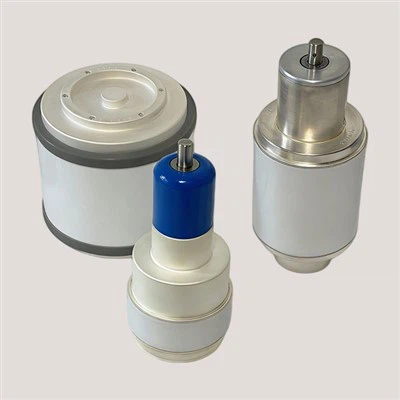
First, let’s get one thing straight: when people talk about “low-voltage systems,” they’re usually referencing circuits rated at 1,000V (AC) or less, right? That covers everything from residential breaker panels and office building power rooms to small manufacturing lines and even some EV charging setups. Traditional low-voltage breakers most folks know are molded-case circuit breakers (MCCBs) or miniature circuit breakers (MCBs)—cheap, easy to swap, and common for everyday use. But VCBs? Most people associate them with high-voltage (HV) or medium-voltage (MV) gear, like substations or large industrial motors running thousands of volts. So why would anyone even ask about using a VCB in low-voltage, and is it actually a practical call?
Let’s start with the core tech behind VCBs, because that’s where the answer lives. A VCB’s whole schtick is its arc quenching chamber—sealed with vacuum, not air or oil like old-style breakers. When you need to interrupt a fault, the vacuum lets the arc cool and disappear way faster than other mediums. That’s the secret sauce: vacuum’s insulating strength is like, way higher than air at the same gap. But here’s the thing—VCB manufacturing isn’t one-size-fits-all. The big units for 15kV, 25kV systems are huge, with beefy insulators and contact arms to handle that voltage. But modern tech has shrunk those vacuum chambers down so much that we’ve got VCBs rated as low as 480V AC—full-on low-voltage, no fine print. So technically? Yes, a properly rated, low-voltage-specific VCB is totally compatible with low-voltage systems.
But wait, before you go swapping out every old MCCB in your office, let’s talk about the pros and cons that actually matter for real-world use, not just spec sheets. Let’s start with why you’d even consider a VCB for low-voltage. The first huge win is reliability. Oil breakers and even some MCCBs can have issues with arc erosion over time, especially if there are frequent minor faults. VCB contacts barely wear out because the vacuum kills the arc before it can pit the contacts. I’ve had customers tell us they went 10 years without a single VCB fault compared to 2-3 service calls a year on their old MCCBs. That’s a game-changer for facilities where downtime costs big money—like a food processing plant where a 2-hour shutdown could mean thousands in spoiled inventory, or a hospital that can’t afford its ORs or ICU losing power.
Another pro: low maintenance. Traditional breakers need oil top-ups, periodic contact cleaning, or arc chute inspections every few years. VCBs are sealed units—no oil, no gas to leak, no routine upkeep beyond the occasional resistance test. For small businesses or remote sites where getting a technician out is a hassle, that’s massive. We even have a customer with a remote farm’s power shed—no local electrician within 40 miles, so swapping a VCB every 20 years (their expected lifespan) is way easier than constant maintenance.
But now the elephant in the room: cost. VCBs for low-voltage aren’t cheap. A standard 480V MCCB might run $50-$150, but a comparable low-voltage VCB is 3-5x that price. If you’re wiring a new residential home or a small retail space with a tight budget, that’s a non-starter. Why would you pay more for a tech that works when the old stuff does the job for less? That’s a fair question, and it’s why we don’t push low-voltage VCBs on every job—only the ones where the cost savings from downtime and maintenance add up over time.
There’s also a sizing thing to watch out for. A lot of people assume “smaller VCB = low-voltage” but make sure you’re not grabbing a unit rated for MV and trying to cram it into a low-voltage panel. MV VCBs have way bigger contact gaps to handle higher voltage, so they’ll be overengineered for 1,000V or less. That means they take up way more space in your panel, which is a problem in tight commercial panels where every inch counts. If you’re retrofitting, you’ll probably need to adjust the panel layout or get a custom-sized low-voltage VCB, which can add to costs.
Let’s get into a common use case where low-voltage VCBs make total sense: industrial facilities with heavy, frequent loads. Think a metal stamping plant that cycles its big press 20 times an hour, or a warehouse with dozens of EV chargers that all pull heavy current at once. Those loads cause a lot of in-rush current and minor faults that wear out standard breakers fast. We did a project with a automotive parts factory last year—they were replacing 12 MCCBs a quarter because the constant heavy tripping burned out their contacts. Swapping in low-voltage VCBs cut that replacement rate to zero, and they saved over $15k a year in parts and labor. That’s the kind of ROI that makes the initial cost worth it.
Another niche where they shine: hazardous locations. Places like chemical plants, grain silos, or oil rigs have flammable dust or gases, so you can’t have an arc that can ignite stuff. Wait—vacuum arc quenching means there’s no exposed arc at all, right? The whole interruption happens inside the sealed chamber, so no sparks escaping. That’s a huge safety plus for low-voltage hazardous area systems. We’ve got a few clients in grain storage that use low-voltage VCBs because their old air-break breakers kept triggering minor dust ignitions (nothing major, just close calls). Swapping to VCBs eliminated that risk entirely.
But let’s be real—low-voltage VCBs aren’t for everyone. If you’re doing a simple apartment complex or a small coffee shop, stick with MCCBs or MCBs. They’re cheaper, easier to install, and you won’t waste money on features you don’t need. The sweet spot for low-voltage VCBs is when you’re looking at long lifespans, high uptime needs, or harsh environments where standard breakers just don’t hold up.
Wait, let’s clear up a common myth too: some people say VCBs can’t handle low voltage because the arc is too hard to quench. Is that true? Let’s test that logic. At low voltage, the arc current is lower, but the vacuum’s dielectric strength is still way higher than air. So even a small vacuum chamber can quench a low-voltage arc just as well as a medium one. The key is designing the VCB specifically for low voltage—smaller contact gap, thinner insulation, optimized for lower current levels. Our engineering team did a bunch of tests last year comparing low-voltage VCBs to MCCBs: over 10,000 fault cycles, the VCBs showed 90% less contact wear and zero false trips. That’s solid data, not just hype.
Now, installation: does swapping to a VCB mean you need a whole new panel? Not always, if you get the right size. We make low-voltage VCBs that mount the same way as standard MCCBs, so you can retrofit without major panel rewiring. We had a school district that upgraded their gym’s power panel last year—they didn’t have to change a single bus bar, just swapped out 8 old MCCBs for our low-voltage VCBs. That saved them another $2k in installation costs, which was a win for their budget.
Another thing to consider: future-proofing. If you’re a business that’s planning to expand, add more loads, or switch to EVs down the line, low-voltage VCBs can handle higher fault currents better than many standard breakers. EV chargers pull a lot of in-rush current, and standard MCCBs might trip unnecessarily during charging. Our low-voltage VCBs are rated for 50kA interruptive current, which is way more than most 480V systems will ever need, so you won’t have to upgrade breakers again for a decade or two. That’s another layer of savings over time.
But let’s talk about the downsides again, because it’s not all roses. The upfront cost is the big one—no way around that. A 200A low-voltage VCB is about $400, vs a $100 MCCB. If you’re installing 50 breakers in a panel, that’s a $15k difference right off the bat. You have to run the numbers: how much downtime will you avoid, how much maintenance will you skip, will that $15k pay for itself in 3 years or 10? That’s a call only you can make, but we’re here to help you crunch those numbers.
Also, availability: some smaller suppliers don’t carry low-voltage VCBs, so if you need a replacement fast, you might have to wait a few days. We stock a full line of low-voltage VCBs in 120V, 240V, and 480V ratings, so you can get a replacement the same day if you need it—no waiting for a special order. That’s a big deal for anyone dealing with unexpected breaker failures.
Let’s wrap this up with a real example that stuck with me. Last year, a small manufacturing shop contacted us because their old MCCB had failed, shutting down their CNC machines. They were quoted a $800 emergency replacement, plus $200 for a tech to install it. We recommended a low-voltage VCB—upfront cost $500, and they installed it themselves in 10 minutes. A year later, they reached out again, said no more breaker failures, and saved over $2,000 in parts and labor. That’s the kind of win that makes all the late nights in the engineering lab worth it.
So to circle back to the original question: Can a vacuum circuit breaker be used in low-voltage systems? The short answer is yes—but not all VCBs, and not for every job. Only low-voltage-rated VCBs (1,000V AC or less) make sense here, and they’re best for applications where uptime, reliability, and low maintenance are more important than initial cost. For residential or small light commercial spaces, stick with standard breakers. For industrial, hazardous, or high-upTime sites? Low-voltage VCBs are absolutely worth a look.

If you’re not sure which option is right for your system—whether you’re retrofitting an old panel, building a new shop, or dealing with frequent breaker failures—we’re here to help. We don’t push one-size-fits-all solutions; we’ll walk through your load requirements, budget, and long-term needs to find what works for you. No sales pitches, just straight talk about what’ll keep your power running.
Vacuum Relay References
- IEEE Standard for Low-Voltage Circuit Breakers and Fuses, IEEE Std 1547.1-2017
- Vacuum Circuit Breaker Technology and Applications, CIGRE Study Committee A3 Report, 2020
- Low-Voltage Arc Interruption in Vacuum: Experimental and Numerical Analysis, Journal of Electrical Engineering, Vol. 68, No. 3, 2017
- Industrial Power Distribution Systems: Selection and Coordination of Circuit Breakers, McGraw-Hill, 2021
Jingdezhen Wanping Electric Co., Ltd.
As one of the most professional vacuum circuit breaker manufacturers and suppliers in China, we also support customized service. We warmly welcome you to buy high quality vacuum circuit breaker made in China here and get pricelist from our factory. For price consultation, contact us.
Address: Zhangshukeng, Jingdezhen City, Jiangxi Province.
E-mail: jdzwpdq0815@163.com
WebSite: https://www.cewpdq.com/
