When I started out as an EPS Block Molding Machine supplier fifteen years ago, I quickly learned that selling a top-of-the-line machine is only half the battle—operators who know how to run it well make the other half. I’ve seen it a hundred times: a manufacturer brings in a brand-new machine, full of the latest sensors and automation, but after a few botched runs, they’re throwing their hands up wondering why the blocks are warped or too dense. Nine times out of ten, it’s not the machine—it’s the operator. They either don’t understand the subtle interplay of steam pressure, cooling time, or bead moisture, or they’re cutting corners to hit production targets. Over the years, I’ve developed a training framework that works, tailored specifically to the operators who work on our machines, and I’m sharing it here because good operators don’t just run the machine—they unlock its full potential. EPS Block Molding Machine
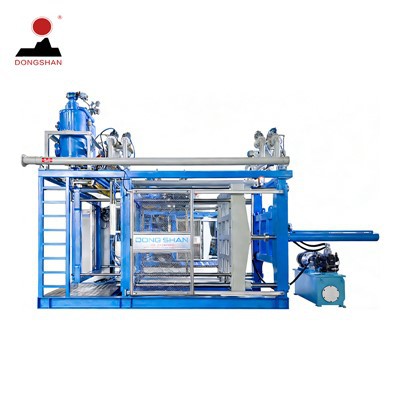
Let’s start with the basics, and I mean really basic. A few months back, a customer called me in a panic because their new machine was leaking steam everywhere, and they were convinced it was a faulty valve. When I showed up, the operator was standing right next to the machine, but he had no idea how the steam lines connected to the mold cavity. He’d been on a different brand of machine for ten years, and he’d just assumed the setup was the same. That’s why our first training module isn’t about hitting production numbers—it’s about getting comfortable with the machine itself. We break down every component: the material hopper, the pre-expander, the steam distribution system, the cooling jacket, and the control panel. We don’t just point to parts on a diagram; we take the machine apart (gently, with supervision) so operators can feel the grooves on the mold, test the pressure release valve, and see how the pre-expander measures bead size. For anyone who’s never worked with EPS before, this is non-negotiable. Beads aren’t just plastic pellets—they’re porous, sensitive to humidity, and their size directly affects how the block forms. I remember one trainee who spent the first three days just running empty cycles, adjusting the steam flow back and forth, until he could hear the difference in how the mold pressurized. That hands-on, no-pressure time eliminates the "it’s not my job" mindset and turns operators into people who understand the machine as a system, not just a series of buttons.
Next, we dive into the science of EPS block molding, and this is where a lot of training programs fail. They skip the "why" and just teach the "do this, press that." But if an operator knows why steam pressure matters, they won’t panic when a gauge reads a little off—they’ll be able to adjust confidently. Let’s break it down: when EPS beads are injected into a mold, steam penetrates their porous surfaces, melting the outer layers so the beads fuse together. The key is consistent pressure and time. Too low a pressure, and the beads won’t merge; too high, and the mold expands, leaving a warped block. Temperature ties into this too—if the ambient humidity in the factory is high, the beads absorb moisture, so you need to adjust the pre-expansion time to get the right bead density. We bring in foam science specialists to walk through this, and we use real examples from our customers. One customer in a coastal city struggled with inconsistent blocks during rainy season, until their operator started adjusting the pre-expander’s drying cycle by 10 minutes each time the humidity rose or fell. That’s the kind of knowledge that only comes from understanding the material, not just following a checklist. We also teach operators to read the data from our machine’s built-in sensors—not just the numbers, but the patterns. A spike in cooling time can mean a leak in the mold jacket, or it can mean that the water supply temperature is off. Learning to spot those patterns turns an operator into a troubleshooter, not just a button-pusher.
Once operators have the basics down, we move to practical, hands-on training on live production runs—but with a safety net. I never let a new trainee run a full, high-stakes block run on their own. We start with small, test molds, running 10-12 blocks at a time, and we walk through every step together. Injection, pre-steam, main steam, cooling, demolding—we stop at each stage to talk about what to look for. Is the mold filling evenly? Are there cold spots that could cause voids? When demolding, is the block sticking because the cooling time was too short? We use a digital logbook we designed specifically for our machines, so operators can track every variable: steam pressure, cycle time, pre-expansion temperature, even the time of day. After each run, we go over the results together. If a block has a soft edge, we look back at the steam pressure curve from the control panel. If it’s too dense, we check the pre-expander settings. Over four weeks, trainees work their way up to full production runs, with more independence each time. Halfway through, we introduce them to common issues: mold fouling, clogged steam lines, inconsistent bead supply. We role-play these scenarios, so when a real problem hits on the shop floor, they don’t freeze up. Last year, a trainee I’d worked with was running a night shift when a steam line got kinked. Instead of shutting down the whole line and waiting for maintenance, he adjusted the pressure temporarily, logged the issue, and got the line back up in 20 minutes. That’s the payoff of this kind of training—operators who solve problems before they become full-blown disasters.
Safety is non-negotiable, and it’s something I emphasize from day one. EPS is flammable, steam is hot, and heavy molds can cause serious injuries. I’ve seen too many operators take shortcuts to save time—like skipping the interlock on the mold door, or not wearing heat-resistant gloves when inspecting the cavity. We don’t just give a 15-minute safety lecture on day one; we integrate it into every training module. When we teach mold disassembly, we practice locking out the machine’s power source before touching any parts. When we walk through steam line maintenance, we go over how to bleed pressure safely, step by step. We also bring in OSHA-trained instructors to cover specific hazards related to EPS molding, like dust exposure from bead handling. The good news is that our machines are designed with safety as a core feature—emergency stops on every side, pressure relief valves that automatically activate, and interlocks that prevent the mold from opening if steam is still present. But safety isn’t just about the machine—it’s about habit. The best operators don’t just follow safety rules; they enforce them on their team. I had a customer whose operator noticed a new hire leaning over a hot mold, and stopped him before he could get burned. That’s the culture we want to build, not just operators who know how to run a machine, but operators who look out for each other.
Finally, training doesn’t stop after four weeks. The EPS industry evolves—new bead formulations hit the market, our machines get software updates that add new automation features, and even energy regulations change, which means adjusting cycle times to meet new efficiency standards. We offer ongoing support: monthly refresher webinars, access to our dedicated operator knowledge base, and on-site training whenever a new feature is added to your machine. We also have a global network of operators who use our machines, so we facilitate a community where they can share tips and solve problems together. Last year, operators from three different continents shared a trick for reducing steam usage by 15% by adjusting the pre-steam cycle, which we were able to pass along to all our customers. That’s the kind of value that comes from investing in your operators long-term, not just during the initial training.
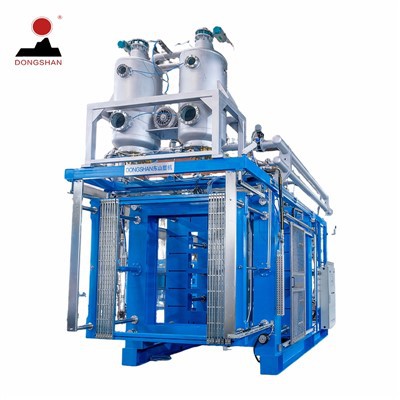
At the end of the day, an EPS Block Molding Machine is a big investment—one that can make or break your production line. You can buy the most advanced machine with all the bells and whistles, but without a skilled operator, you’re leaving money on the table. I’ve worked with hundreds of manufacturers over the years, and the ones who thrive are the ones who treat their operators like partners, not just line workers. If you’re bringing in a new EPS Block Molding Machine and you want your team to be confident, efficient, and safe on day one, we’re here to help. Our training program is tailored to your specific machine, your production goals, and your team’s experience level—no one-size-fits-all nonsense. To learn more about how we can get your operators up to speed, connect with us to discuss your needs, and we’ll walk you through our training framework and how it fits into your operation.
EPS Pre-expander References
- Smith, J. (2021). Fundamentals of Expanded Polystyrene (EPS) Manufacturing. Industrial Foam Technology Press.
- International Association of Plastics Distributors. (2022). Operator Safety and Efficiency in EPS Processing Facilities. Industry Standards and Practice Guide.
- Lee, S. (2019). Advanced Process Control for Block Molding Machinery. Journal of Industrial Manufacturing Systems, 14(2), 45-62.
- Occupational Safety and Health Administration (OSHA). (2020). Safety Guidelines for Operating and Maintaining Plastics Processing Machinery. U.S. Department of Labor.
- Patel, R. (2023). Optimizing EPS Block Production Cycle Times: Balancing Quality and Efficiency. Manufacturing Engineering Journal, 31(4), 112-128.
Hangzhou Fuyang Dongshan Plastic Machinery Co., Ltd.
Hangzhou Fuyang Dongshan Plastic Machinery Co., Ltd. is one of the most professional EPS block molding machine manufacturers and suppliers in China, featured by quality products and low price. Please feel free to wholesale advanced EPS block molding machine made in China here and get quotation from our factory. Customized orders are welcome.
Address: 101 Guanting, Baiqian Villige, Luzhu Town, Fuyang District, Hangzhou City, Zhejiang Province, China
E-mail: xu@dong-shan.cn
WebSite: https://www.epseppmachinery.com/
