Hey there! I’m an AC servo motor supplier, and today I wanna chat about the compatibility of an AC servo motor with a drive. It’s a super important topic, especially for those in the industrial automation and machinery world. AC Servo Motor
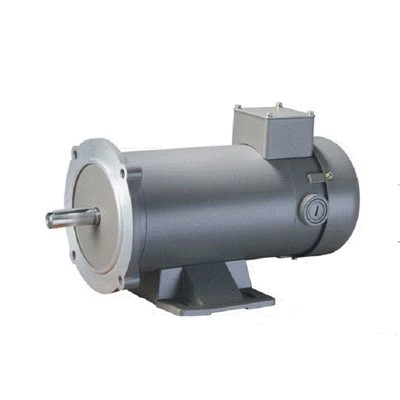
Let’s start by understanding what an AC servo motor and a drive are. An AC servo motor is a high – performance motor that can precisely control speed, position, and torque. It’s like the muscle in a machine, doing the heavy – lifting and precise movements. On the other hand, a drive is the brain. It sends the right signals to the motor, telling it when to start, stop, how fast to go, and how much force to apply.
The compatibility between the two is crucial. If they’re not compatible, it’s like trying to fit a square peg into a round hole. The motor won’t work as it should, and you might end up with a whole bunch of problems, like poor performance, overheating, or even motor failure.
Key Factors for Compatibility
Power Rating
One of the first things to consider is the power rating. The drive needs to be able to supply enough power to the motor. If the drive’s power output is too low, the motor won’t be able to reach its full potential. It might struggle to start, or it could stall under load. For example, if you have a high – power AC servo motor that requires 5 kilowatts to operate at its best, but your drive can only supply 3 kilowatts, you’re in trouble.
On the flip side, if the drive has too much power, it can be a waste of energy. Plus, it might cause the motor to overheat, which can shorten its lifespan. So, you gotta match the power rating of the motor and the drive as closely as possible.
Voltage and Current
Voltage and current are also super important. The motor and the drive need to have the same voltage requirements. If the drive supplies a different voltage than what the motor is designed for, it can damage the motor. For instance, if a motor is rated for 220 volts, but the drive supplies 440 volts, it’s gonna fry the motor pretty quickly.
Current is related to the power and the load on the motor. The drive needs to be able to handle the current that the motor draws. If the drive can’t handle the current, it might trip a circuit breaker or shut down. And if the current is too low, the motor won’t have enough power to run properly.
Communication Protocols
In modern systems, communication between the motor and the drive is key. There are different communication protocols, like CANopen, Modbus, and EtherCAT. The motor and the drive need to use the same protocol to be able to talk to each other. If they don’t, they won’t be able to exchange the necessary information about speed, position, and torque.
For example, if the motor uses the CANopen protocol, but the drive uses Modbus, they won’t be able to communicate effectively. This can lead to inaccurate control of the motor, and the system won’t work as expected.
Feedback Devices
Most AC servo motors use feedback devices, like encoders or resolvers, to provide information about the motor’s position and speed. The drive needs to be compatible with these feedback devices. If the drive can’t read the signals from the feedback device, it won’t be able to control the motor accurately.
For instance, if the motor has an absolute encoder, but the drive is only designed to work with incremental encoders, it won’t be able to get the correct position information. This can result in the motor moving to the wrong position or having inconsistent speed.
Why Compatibility Matters in Real – World Applications
In industrial automation, having a compatible motor – drive system is essential. Take a robotic arm, for example. The robotic arm needs to move with high precision to pick and place objects. If the AC servo motor and the drive aren’t compatible, the arm might not move accurately. It could miss the target, drop the object, or even cause damage to the equipment.
In a CNC machine, the motor – drive compatibility is also crucial. The machine needs to cut and shape materials with high accuracy. If the motor and the drive don’t work well together, the cuts might be off, and the finished product won’t meet the required specifications.
How We Ensure Compatibility as a Supplier
As an AC servo motor supplier, we take compatibility very seriously. We work closely with our customers to understand their specific needs. When they come to us with a project, we ask them about the application, the power requirements, the communication protocols they plan to use, and the feedback devices they have.
We have a wide range of AC servo motors and drives in our inventory. We can match the right motor with the right drive based on the customer’s requirements. We also provide technical support to help our customers install and configure the motor – drive system.
We test our products rigorously to make sure they’re compatible. Before we send a motor – drive combination to a customer, we run it through a series of tests to check its performance. We look at things like speed control, position accuracy, and torque response. If there are any issues, we make the necessary adjustments to ensure compatibility.
The Impact of Incompatibility on Cost
Incompatibility can also have a big impact on cost. If you end up with a motor – drive system that’s not compatible, you might have to buy new components. This can be expensive, especially if you’ve already invested a lot in the initial setup.
There’s also the cost of downtime. If your system isn’t working properly because of compatibility issues, your production might come to a halt. This can result in lost revenue and increased costs.
Making the Right Choice
When you’re looking for an AC servo motor and a drive, it’s important to do your research. Don’t just go for the cheapest option. Look for a supplier who can provide you with a compatible motor – drive system.
Ask for references and case studies. See how the supplier has solved compatibility issues for other customers. Check the warranty and the technical support they offer.
If you’re not sure about the compatibility, you can always ask for a demonstration. A good supplier will be happy to show you how their motor – drive system works and how it can meet your needs.
Conclusion
In conclusion, the compatibility of an AC servo motor with a drive is a critical factor in the performance and reliability of your system. It affects everything from the accuracy of your movements to the cost of your operation.
As an AC servo motor supplier, we’re here to help you find the right motor – drive combination for your project. We have the expertise and the products to ensure that your system works smoothly and efficiently.
Brushless Motor If you’re in the market for an AC servo motor and a drive, or if you have any questions about compatibility, don’t hesitate to reach out. We’d love to have a chat with you and discuss how we can meet your needs. Let’s work together to get your project up and running!
References
- "Servo Motors and Drives: Basics, Selection, and Application" by David P. Crolla
- "Motion Control Handbook" by Dan Jones and Mark T. Holmes
- Industry whitepapers on AC servo motor and drive compatibility from leading manufacturers.
Zibo Auric Mechanical and Electrical Technology Co., Ltd.
As one of the leading ac servo motor manufacturers and suppliers in China, we warmly welcome you to buy advanced ac servo motor for sale here from our factory. All customized motors are with high quality and competitive price.
Address: B419, High-tech Entrepreneurship Park, High-tech Zone, Zibo City
E-mail: cui@auricmotor.com
WebSite: https://www.auricmotor.com/
