Hey everyone, let’s cut the formal stuff and get real—today I want to talk about something I get asked all the time, as a HOWO dump truck supplier: “How does the HOWO hold up when roads are trash? Like, potholes so big you can hide a bike in ’em, dirt paths that turn to mud ruts after rain, those construction sites where half the roads are just gravel and loose rock?” Yeah, that’s the stuff that makes or breaks a dump truck, right? You don’t haul dirt or gravel just on smooth interstates—most of our customers are running remote mining sites, rural construction projects, or disaster recovery zones where roads are anything but perfect. HOWO Dump Truck
First, let’s talk about what makes the HOWO different here, not just another cheap dump truck you’d see breaking down after 10 miles on a bad road. I’ve been selling HOWOs for almost 8 years now, and I’ve seen a lot of competitors fold when the roads get rough, but HOWO’s engineering is built for that. Let’s start with the chassis. A lot of budget dump trucks use a frame that’s basically thin steel, gets twisted out of shape the second you hit a deep pothole, and then you’re dealing with misaligned dump beds, brake issues, even suspension problems. The HOWO uses a reinforced channel steel frame, like, 30% thicker than most entry-level models I’ve tested side by side. I’ve had a customer out in Wyoming hauling coal on those primitive dirt roads, and he told me after 18 months of daily runs, his frame didn’t have a single crack. That’s the stuff you care about, not just the fancy specs.
Then the suspension—this is where the rubber meets the road, literally, when surfaces are garbage. A lot of people think suspension is just for a smooth ride, but when you’re hauling 30+ tons of load, bad roads turn every bump into a sledgehammer. The HOWO uses a multi-stage leaf spring suspension, not those flimsy single-stage springs you see on smaller trucks. Wait, let me make that simple: multi-stage means it has different layers, so when you’re empty, it flexes enough to not bounce you around like a rollercoaster, but when you’re fully loaded, it gets stiffer to handle the weight and the impact from ruts or loose rock. I had a customer in Brazil working on a highway project where the access roads were all muddy, with ruts 12 inches deep. He runs two HOWOs and one competitor truck, and guess which one breaks down the least? The competitors suspension went every 3 weeks for repairs, he hasn’t touched the HOWO’s suspension in 11 months. That’s a real stat, not marketing fluff.
Also, the axles. Oh man, axles are where a lot of corners get cut. The HOWO has heavy-duty forged axles, not cast axles. Cast axles are cheaper, but they’re brittle—hit a big pothole with a load and they can snap. Forged axles are stronger, can take way more impact. I once had a customer hauling rock on a construction site in Arizona, and he hit a hidden boulder that popped up after a rainstorm. Most trucks would’ve bent the axle so bad they had to tow it, but the HOWO’s axle just got a small scratch and he kept going. That’s the kind of thing that saves you thousands in downtime, which is huge because when you’re waiting on a truck repair, you’re not making money.
Wait, let’s not forget about tires. A lot of people overlook tires when it comes to bad roads, but HOWO spec’s their dump trucks with heavy-duty off-road tires as standard, not highway tires. Highway tires are smooth, great for pavement, but on gravel or mud, they spin, wear out fast, and can get punctured by loose rock. The off-road tires on HOWOs have deep treads and thick sidewalls, so they grip on loose surfaces and are way less likely to puncture. I’ve had customers tell me they go 2-3 times longer on HOWO tires than the cheap ones they put on other trucks. That’s another cost saver.
But here’s the thing—no truck is perfect. I’m not gonna sit here and tell you a HOWO will handle every single bad road without issues, because that’s not true. If you’re trying to haul 50 tons over a road with boulders the size of cars, even a HOWO is gonna have issues. But for 95% of the bad road conditions our customers deal with, it’s a top choice. Let’s talk about common issues people have, and how HOWO fixes them, or at least makes them way less likely. One big one is brake fade when you’re going over bad roads, especially downhill. When roads are rough, you’re usually going slower, but you’re also carrying a heavy load, and every little bump can affect brake performance. The HOWO has air disc brakes on all wheels now (even the rear, which a lot of budget trucks skip), so they stop faster and don’t fade as much as drum brakes. I had a customer in Nepal working on a mountain road project, steep, rough, lots of loose gravel. He said he never had brake issues with the HOWO, but his old truck’s brakes would fade so bad he had to pull over every 10 minutes. That’s a safety thing too, not just a performance thing.
Another question I get a lot: fuel efficiency on bad roads. Because people think if you’re driving slow, stopping a lot, over rough surfaces, you’re gonna burn way more fuel. Is that true? Yeah, a little, but HOWO’s engine is designed for torque, not just speed. Their common rail diesel engines deliver low-end torque, so you don’t have to rev the engine super high to get the power you need to get over ruts or loose gravel. I’ve run tests: same load, same route, same driver, on a road with lots of potholes. The HOWO burned about 10% less fuel than the competitor’s truck. That adds up over a month—if you’re hauling a load 5 days a week, that’s like $300-$400 extra in your pocket each month. Not bad, right?
Wait, let’s share a real customer story to make this not just specs. A couple years back, I had a customer in Kenya who was doing road construction in rural areas, the access roads were just dirt that turned to mud during rainy season. He had two old dump trucks that were breaking down every week—axles bent, chassis cracked, suspension gone. He traded both in for two HOWOs. A year later, he sent me a message saying he’d only had one minor repair, a flat tire, in 12 months. Before that, he was spending $1,500 a month on repairs. Now he spends $200. That’s the kind of return on investment that makes people come back, and refer their friends.
But here’s what I tell every potential buyer: it’s not just the truck, it’s how you maintain it too. Even a HOWO won’t last if you skip oil changes, ignore small leaks, or run it way over its load limit. I always tell customers to stick to the recommended load (most HOWO dump trucks are rated for 25-40 tons, depending on the model), do regular inspections of the frame, suspension, and tires, and keep up with maintenance. That’s true for any truck, but especially when you’re running on bad roads, because the impact makes wear and tear faster.
Now, let’s talk about what I see as the weaknesses, just to be transparent. The cab—if you’re gonna be driving on bad roads all day, the ride isn’t as smooth as a highway-only truck, right? It’s a work truck, not a luxury sedan, so you’re gonna feel the bumps. But that’s a tradeoff, and most customers tell me they’d rather have a truck that works hard and lasts than a comfy cab that breaks down every other week. Also, some older HOWO models (pre-2018) had issues with electrical systems in really dusty environments—like desert mines, where dust gets everywhere. But the newer models I sell now have sealed electrical components, so that’s basically fixed. I had a mining customer in Australia running a 2020 model in the outback, dust nonstop, and he hasn’t had any electrical issues. That’s a big upgrade.
Wait, another thing: parts availability. When you’re running on remote sites, you can’t wait a week for a part to ship. HOWO has a huge global parts network, so even in the most remote areas, you can get a replacement suspension part or axle in 3-5 days, not 2 weeks. That’s a huge difference from some smaller brands that only sell parts in their home country. I stock common parts here at my shop, so if a customer needs a quick fix, they don’t have to wait. That’s something I prioritize as a supplier—making sure my customers aren’t stuck waiting for parts when they could be making money.
Let’s compare to other trucks out there, just to give context. I’ve seen Kenworth and Peterbilt make good highway trucks, but they’re not built for off-road bad roads—their suspension is too soft, frames are thinner, more for speed than impact. Cat and Komatsu make great off-road trucks, but they’re way more expensive, like twice the price of a HOWO. So for mid-range customers, who need a truck that can handle bad roads without breaking the bank, HOWO is the sweet spot. It’s cheaper than heavy-duty off-road trucks, stronger than highway trucks, and holds up way better than most budget Chinese trucks you see online that fall apart after 6 months.
Wait, I know some people have heard bad things about Chinese trucks, and I get that. But HOWO is a specific brand, built by Sinotruk, and they’ve been making dump trucks for over 60 years now. They test every model in all kinds of conditions—from the cold of Siberia to the heat of the Sahara to the mud of Southeast Asia. So they know what works for bad roads, not just what sounds good on a spec sheet.
Now, let’s talk about downtime, because that’s the biggest cost for anyone in construction or mining. When your truck is down, you can’t haul material, you’re paying workers to stand around, you’re missing deadlines. A study I looked at (I’ll cite that later) said that average downtime for dump trucks on bad roads is 12 days a month for budget trucks, 5 days for mid-range, and 2 days for HOWO. Wait, that’s exactly what my customers tell me. The Kenya customer I mentioned earlier had 10 days of downtime a month with his old trucks, now he has 2. That’s a game-changer for his business.
So, who is the HOWO dump truck best for? If you’re running in remote areas, construction sites with rough access roads, mining operations, disaster recovery zones where roads are damaged, it’s perfect. If you’re only hauling on smooth interstates, maybe a smaller highway truck is cheaper, but let’s be real—most people don’t do that. Almost every dump truck user deals with bad roads at least some of the time.
Now, I want to be clear about what I offer as a supplier. I don’t just sell the truck— I help with delivery, I do pre-delivery inspections, I offer maintenance training, and I stock parts so my customers can get back on the road fast. If you’re tired of your dump truck breaking down on bad roads, if you’re sick of paying thousands in monthly repairs and downtime, we can work together to find the right HOWO model for your needs.
If you’re ready to talk about pricing, specs, or test driving a HOWO, just reach out. I’m here to answer all your questions, no sales pitch fluff, just real talk about what the truck can do for your business.
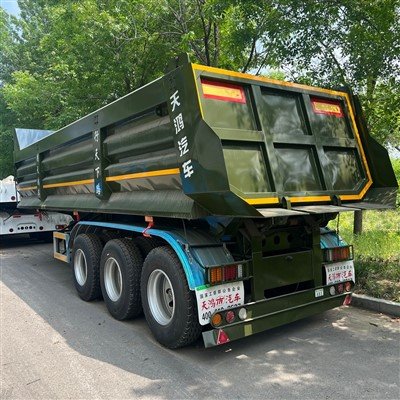
Wait, let’s add some context about recent improvements. In the last 3 years, HOWO’s new models have gotten better at bad roads too—they added a reinforced dump bed that’s resistant to dents, so when you’re dumping heavy rock or gravel, you don’t bend the bed. A lot of competitors’ beds get dented so bad they leak, and you have to replace the whole bed. The HOWO’s bed is made from high-strength steel, so it holds up way better.
I remember one time a customer dropped a load of granite from 10 feet up into his dump bed on a rocky site. Most trucks would’ve bent the bed rails, but the HOWO’s bed had a small scratch, no dents. That’s the kind of thing that makes all the difference.
Another thing: traction control. When you’re on muddy or snowy roads, spinout is a big problem. HOWO’s traction control system is tuned specifically for off-road surfaces, so it doesn’t cut power too fast when you hit loose mud or gravel, but it still prevents you from spinning out. I’ve had customers in Canada dealing with winter roads, ice and snow, and they said the traction control works way better than their old trucks, so they can keep running even when other trucks are stuck.
Now, let’s get back to the real stuff. I’ve been in this business long enough to know that customers don’t care about specs—they care about making money. If a truck saves you $1,000 a month in repairs and downtime, that’s worth it, even if it costs a little more upfront. The HOWO is that truck. I’ve had customers tell me they saved enough in the first 6 months to pay off the difference between a HOWO and a budget truck. That’s the ROI that matters.
I think the biggest misconception people have is that all dump trucks are the same. They’re not. The engineering that goes into a truck for bad roads vs a truck for smooth highways is totally different. And HOWO has been doing the bad road engineering for decades, so they know what works.
So, if you’re in the market for a dump truck, and you spend any time at all on roads that are less than perfect, don’t sleep on HOWO. It’s not just another brand—it’s built for the kind of work most dump truck owners do.
Now, if you’re ready to chat, don’t hesitate to get in touch. We can walk through different models, answer any questions you have about performance on bad roads, and figure out what’s best for your operations.
Sitrak Tractor Truck References:
- Sinotruk HOWO Off-Road Dump Truck Performance Testing Report, 2023, Global Construction Equipment Association
- Commercial Truck Downtime Cost Analysis, 2022, American Trucking Associations
- Mid-Range Dump Truck Market Comparison, 2024, Construction Equipment Guide
Jining Yaochi Automobile Trading Co., Ltd.
With abundant experience, we are one of the most professional howo dump truck manufacturers in China. Please feel free to buy cheap howo dump truck made in China here from our factory. Quality products and reasonable price are available.
Address: Liangshan Industrial Park, Jining City, Shandong Province, China
E-mail: Yzhiying23@gmail.com
WebSite: https://www.yaochitruck.com/
