When I first started working as an industrial exhaust fan supplier back in 2012, I’d walk into warehouses and see business owners cutting corners on ventilation because they thought it was just about “keeping air moving.” I once visited a 50,000-square-foot textile warehouse where the air was so thick with lint and dust that workers were wearing masks with filters clogged in 20 minutes, even though the building had three small exhaust fans tucked in a corner. That warehouse’s ventilation system wasn’t just inefficient—it was a ticking time bomb for respiratory issues and even fire risks from lint buildup. Today, after a decade of installing and troubleshooting industrial exhaust fans, I can tell you that getting the ventilation requirements right isn’t just a regulatory box to check—it’s about keeping your team safe, your equipment running, and your bottom line intact. Let’s break down exactly what warehouse ventilation demands, how industrial exhaust fans factor in, and what I’ve learned from working with hundreds of warehouse operators over the years. Industrial Exhaust Fan
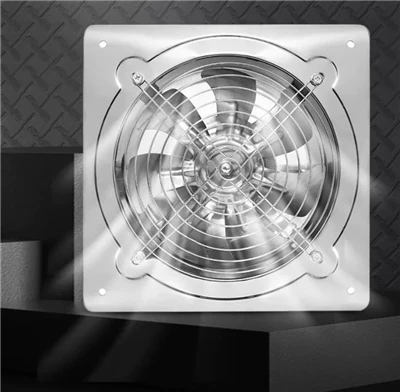
First, you have to start with the basics: why warehouse ventilation isn’t one-size-fits-all. Every warehouse is different. A food processing warehouse dealing with humidity from refrigeration units has vastly different needs than a metal fabrication shop with metal dust and welding fumes, or a general storage space where workers might be handling pallets and moving heavy equipment. I once worked with a beverage distribution warehouse that stored iced drinks year-round; their ventilation had to combat not just carbon dioxide from forklift engines but also the moisture that built up when cold trucks pulled in and caused condensation on stored products. Skipping a customized approach here is how you end up with problems: mold forming on cardboard boxes, workers struggling to breathe, or even OSHA fines for poor air quality.
The primary role of an industrial exhaust fan in a warehouse is to remove contaminants and replace them with fresh, outdoor air. Those contaminants aren’t just nuisance dust—they can be harmful chemicals, fumes from forklifts or machinery, excess humidity, or even high levels of carbon dioxide from human activity. OSHA sets strict limits on many of these: for example, the permissible exposure limit (PEL) for carbon monoxide is 50 parts per million (ppm) over an 8-hour workday, and for welding fumes it’s 5 mg per cubic meter. Industrial exhaust fans are the workhorses that move enough air to bring those levels under the legal and safe thresholds.
Now, let’s get into the hard numbers, because this is where most people get confused. The general rule of thumb I’ve relied on is 1 to 6 air changes per hour (ACH), but that’s a very wide range, and it’s not one-size-fits-all. Wait—let me explain that. Air changes refer to how many times the total volume of air in a warehouse is replaced with fresh air every hour. For most general storage warehouses with low contaminant levels, 1 to 3 ACH is often enough to keep air circulating and prevent stagnation. But if you have high contaminant levels—like a woodworking warehouse with sawdust, a chemical storage warehouse with volatile organic compounds (VOCs), or a busy loading dock with constant forklift use—you need 4 to 6 ACH, and sometimes even more. I recently worked with a 75,000-square-foot metal stamping warehouse that required 7 ACH because of the metal dust and oil fumes from their 12 stamping machines. Under-spec their exhaust, and within a month, workers were complaining of headaches, and dust was building up on every piece of equipment, leading to more maintenance and breakdowns.
But ACH alone doesn’t tell the whole story. You also have to calculate the required airflow rate (measured in cubic feet per minute, or CFM) for your industrial exhaust fan, and that depends on both the size of your warehouse and the type of contaminants. The formula I use with customers is simple: CFM = (Warehouse Volume in Cubic Feet) x (Required ACH) / 60. Let’s do a real example, because this is something I walk through with every customer. Suppose you have a 30,000 cubic foot general storage warehouse, needing 2 ACH. That works out to (30,000 x 2) / 60 = 1,000 CFM. But if that same warehouse is a food processing space with high humidity, you’d need 3 ACH, so (30,000 x 3) / 60 = 1,500 CFM. That extra 500 CFM isn’t just a random number—it’s the difference between preventing condensation that ruins stored produce and dealing with mold that can lead to thousands of dollars in lost inventory.
A mistake I see a lot of new warehouse owners make is buying an industrial exhaust fan that’s too big. Sure, more airflow sounds better, but oversized fans waste energy—they draw more electricity than needed, and they can create turbulent air that sends contaminants swirling around the warehouse instead of pulling them out. I once advised a large retail distribution center that installed two 10,000 CFM exhaust fans when they only needed 6,000 CFM for their space. After a year, their electricity bill was $12,000 higher than it needed to be, and workers complained that the strong drafts made it uncomfortable to stand near the loading docks. The sweet spot is matching the fan’s CFM exactly to your required airflow, which is why I always recommend doing a quick site assessment before purchasing any equipment.
Another critical factor: the placement of your industrial exhaust fan. Even if you have the right CFM, if you mount the fan in the wrong spot, it won’t do its job. Contaminants don’t just hang out near the floor—many fumes and dust particles rise, while heavier dust stays low. That’s why, in warehouses where contaminants are at floor level (like grain dust in a grain storage warehouse, or metal shavings in a fabrication shop), you should mount exhaust fans lower, near head height or slightly above. For fumes that rise—like forklift exhaust, welding fumes, or VOCs from chemical storage—mounting fans near the ceiling is more effective, because that’s where the contaminants collect. I remember a construction materials warehouse we worked with where the old exhaust fan was mounted 20 feet high on a wall, but the sawdust from their wood cutting operation was hovering 5 feet off the ground. We re-mounted the exhaust fan at 6 feet, and within a week, sawdust levels dropped by 40% without needing to increase the fan’s CFM at all. That placement tweak saved the company almost $5,000 in new equipment costs.
You also have to consider make-up air, which is the fresh air that comes into the warehouse to replace the air the exhaust fan is pulling out. This is a part of ventilation that’s often overlooked, and it’s a big reason why even the best industrial exhaust fan can fail. If your warehouse is sealed tight—with no gaps around doors, windows, or loading dock seals—your exhaust fan will pull a vacuum inside, and the fresh air won’t come in. When that happens, the fan starts drawing in air from wherever it can, which might be through cracks in the walls or even through workers’ breathing zones, meaning they’re breathing in the same contaminated air the fan is supposed to remove. For warehouses that are tightly sealed, you might need to add make-up air units or adjust your loading dock doors to have controlled air entry. I recently worked with a pharmaceutical warehouse that had 80% air tightness; their first exhaust fan installation didn’t work because they had no make-up air. Once we added a small make-up air system that brought in 70% of the exhaust airflow, their ventilation levels hit OSHA requirements immediately.
Regulatory requirements also play a big role here, and non-compliance isn’t worth the risk. OSHA’s General Duty Clause requires employers to provide a workplace free from recognized hazards, which includes poor air quality. That means if your warehouse has excess dust or fumes, you’re responsible for fixing it—whether that’s with industrial exhaust fans, local exhaust ventilation at workstations, or other solutions. I’ve seen companies fined up to $15,000 per serious violation for inadequate ventilation, and in some cases, forced to shut down parts of their operation until the issue was fixed. It’s not just fines, though—poor ventilation leads to higher employee turnover: workers are more likely to leave a job where they feel uncomfortable or unsafe. I had one client in 2018 whose turnover rate jumped 25% in six months because their warehouse had poor ventilation and workers were suffering from respiratory irritation. Once we installed the right industrial exhaust fans, turnover dropped back to normal levels within a year.
Now, let’s talk about maintenance, because even the best industrial exhaust fan won’t last if you don’t take care of it. I always tell customers that ventilation equipment is a set-it-and-forget-it tool—it’s not. Every 3 to 6 months, you should inspect your exhaust fan, clean the blades, check for any blockages in the ductwork, and make sure the motor is running smoothly. In warehouses with lots of dust or lint, blockages can form in the fan housing or ducts, reducing airflow by 30% or more in just a few months. I once visited a textile warehouse where the exhaust fan’s duct was 70% clogged with lint; the fan was running, but it was barely pulling any air, so the lint was circulating throughout the warehouse. We cleaned the duct, and the fan’s CFM went from 800 to 2,200 overnight, which eliminated the lint buildup. Also, regular maintenance helps you catch issues before they become expensive: a loose belt on an exhaust fan, for example, can reduce airflow by 20%, but it’s an easy fix that takes 10 minutes.
Over the years, I’ve learned that every warehouse has unique needs, and there’s no “one size fits all” answer to ventilation requirements. But the core principles are consistent: calculate the right ACH and CFM for your specific contaminants, place your industrial exhaust fan where it will target those contaminants, ensure you have enough make-up air, comply with regulatory standards, and keep your equipment maintained. I’ve seen too many warehouse operators waste money on the wrong fans, or ignore ventilation until it becomes a major problem. The good news is that getting it right doesn’t have to be complicated—with a bit of planning, the right industrial exhaust fan, and regular upkeep, you can keep your workers safe, your inventory intact, and your operation running smoothly.

If you’re not sure what your warehouse’s specific ventilation requirements are, or if you’re looking to upgrade your existing exhaust system, don’t hesitate to reach out to discuss your needs. We work with warehouses of all sizes, from small 10,000-square-foot storage spaces to large 100,000-square-foot distribution centers, and we’ll help you find the right solution that fits your budget and your operational needs. Whether you need a basic assessment, a custom fan design, or ongoing maintenance support, we’re here to help you get your ventilation right.
Range Hood References
OSHA. (2023). Ventilation Guidelines for General Industry. Occupational Safety and Health Administration.
National Fire Protection Association. (2022). Standard for Ventilation Control and Fire Protection of Industrial Operations. NFPA 91.
American Conference of Governmental Industrial Hygienists. (2023). Threshold Limit Values for Chemical Substances and Physical Agents. ACGIH.
Jiaxing Zenterest Import & Export Co., Ltd.
With abundant experience, we are one of the most professional industrial exhaust fan manufacturers and suppliers in China. Please feel free to wholesale high quality industrial exhaust fan made in China here from our factory. We also accept customized orders.
Address: Room 101-3, Building 46, Zhifu Center, Gaozhao Subdistrict, Xiuzhou District, Jiaxing City, Zhejiang Province, P.R.China
E-mail: bonnie.wu@zenterestvent.com
WebSite: https://www.zenterestvent.com/
