If you’ve ever walked a farm lot, landscaping site, or small construction yard, you’ve probably spotted a compact tractor. These versatile, mid-sized workhorses are the workhorses of spaces where a full-sized tractor would be too bulky and underpowered to do the job right. As a compact tractor supplier, I get questions about them all the time—more than I can count, actually—and one of the most common is, “How long do compact tractors last?” Compact Tractors
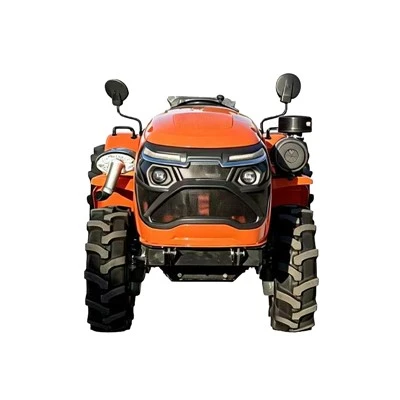
It’s not a simple answer, honestly. A lot goes into it: how you use the tractor, how well you maintain it, what brand it is, even where you store it. I’ve seen some tractors roll past 10,000 hours with barely a hiccup, and I’ve seen others wear out at 2,000 hours because their owner skipped basic maintenance like clockwork. Let’s break this down the way I’d explain it to a first-time buyer standing in my showroom, asking about how much return they can expect on their investment.
First, let’s set a baseline. I’ve been selling compact tractors for 12 years now, so I’ve seen hundreds of units go through our doors, from entry-level models for hobby farmers to heavy-duty workhorses for small contractors. The average compact tractor, when used and maintained as designed, will last between 4,500 and 6,000 hours. That’s a big range, I know, but there’s a reason for that. A hobby farmer who uses their tractor for 50 to 100 hours a year (just mowing pastures, light tilling, hauling firewood) will easily get 50 years out of that unit. A small landscaping company running theirs 400 to 500 hours a year, trimming hedges, hauling mulch, and pushing snow in the winter, is looking at 10 to 15 years of regular use. The pace of use matters more than anything else.
A lot of people don’t realize that compact tractors are built for consistency, not constant, overloaded use. Entry-level models (those under 25 horsepower, usually) are designed for light, occasional tasks. I see these used by homeowners with 5 to 10 acres, or small hobby farms, and they often last 6,000+ hours if you don’t push them beyond their limits. For example, I had a customer in Ohio who bought a 22-horsepower Kubota entry-level model in 2008. He uses it only to mow his 7-acre pasture and plow his driveway, and last year he brought it in for a tune-up with 7,200 hours on the clock. It wasn’t perfect, but it runs great, and he’s been asking about adding a loader attachment to it this year. I’ve seen other entry-level models that got crushed after just 1,800 hours because their owner tried to use them to pull a 5,000-pound trailer every day for construction work—way outside their rated capacity.
Mid-range compact tractors, the ones between 25 and 45 horsepower, are the workhorses of the group. These are the models most small contractors and mid-sized farms buy. They’re built to handle heavier loads, longer work days, more intense use. I typically sell these to landscaping companies, vineyards, and small logging operations, and their average lifespan is 5,000 to 7,000 hours. I had a customer in Tennessee who runs a landscape business, and he’s got a 38-horsepower John Deere mid-range model he bought in 2012. He clocks about 450 hours a year on it, and last spring he replaced the engine gaskets and the hydraulic pump at 6,800 hours. He told me he expects to get another 3,000 hours out of it if he keeps up with maintenance. That’s the sweet spot, right? Mid-range models balance power, durability, and usability, so if you respect their limits, they’ll respect you back for years.
Then there are the heavy-duty compact tractors, the ones over 45 horsepower. These are for users who really put their equipment through its paces: commercial landscaping, large-scale small farming, construction sites that need a machine that can do double duty. I’ve had these last anywhere from 7,000 to 10,000 hours. A construction customer in Texas bought a 52-horsepower Case IH heavy-duty model in 2010, and he runs it 600+ hours a year grading lots, hauling materials, and pushing debris. Last year he hit 9,100 hours, and the only major repair he’s had to do is replace the transmission at 7,500 hours. He told me he’s not planning to replace it anytime soon, because it’s paid for and still works better than most new models he’s priced. That’s the exception, sure, but it’s not unheard of. I’ve even heard of a few heavy-duty compact tractors hitting 12,000 hours, though that’s only with strict, meticulous maintenance.
Now, here’s the part that surprises a lot of new buyers: maintenance is everything. I can sell you the most reliable compact tractor on the market, but if you skip oil changes, don’t check the air filter, or run it over rough terrain with a broken belt, it’s not going to last. I tell every customer the same thing: compact tractors are not set-it-and-forget-it tools. They need regular attention, just like a car, but the upkeep is simpler. Let’s run down the non-negotiable maintenance steps that will add thousands of hours to your tractor’s life.
First, oil and filter changes. Most manufacturers recommend changing the engine oil every 50 to 100 hours, depending on use. For tractors that run in dusty conditions (like construction sites or farm fields), you should do it every 50 hours. Hydraulic fluid and filters are just as important—dirty hydraulic fluid is the #1 cause of pump failure, which is a $2,000+ repair. I’ve seen customers skip hydraulic fluid changes and have to replace the entire loader on their tractor after 3,000 hours, just because they didn’t want to spend $80 on fluid and filters. That’s a no-brainer waste.
Next, air filters. Dust and dirt are the enemy of any engine, especially compact tractor engines that work out in the open. If you leave a dirty air filter on, dust will get into the cylinders, scratch the walls, and cause premature engine wear. I tell customers to check their air filter every 10 hours, and replace it every 100 to 200 hours, more often if they’re working in dusty areas. It’s a $20 part, but skipping it can lead to a $5,000 engine job.
Then there’s storage. I see a lot of tractors left out in the rain and snow all year, just sitting in a field or a backyard. That’s a death sentence for any machine, really. Moisture will rust the engine, the hydraulic lines, the frame, even the electrical components. A tractor stored indoors, in a dry garage or barn, will last 20 to 30% longer than one left outside. I had a customer in Minnesota who kept his tractor in a heated garage, and it hit 8,000 hours with almost no rust. Another customer in Florida left his tractor out under a carport, and at 4,000 hours the frame was already showing serious rust damage. Storage may seem small, but it makes a huge difference.
What about brand? I get asked about that too. Some brands are known for lasting longer than others, but honestly, I’ve seen great and bad examples from every major name in compact tractors. A reliable brand with a track record of good parts and service will always outlast a cheap no-name brand, no matter what. The key is to buy a tractor from a manufacturer that has a local dealer, because when something does go wrong, you need parts fast. A no-name tractor you buy online might be cheaper upfront, but if the transmission breaks, you’ll have to wait weeks for parts, and when you get them, they might not be the right fit. I always recommend sticking to established brands that have a presence in your area, because that support is what makes a tractor last.
Wait, let’s talk about misuse, too. This is the biggest killer of compact tractors, in my experience. I’ve seen customers pull a 10,000-pound log with a 30-horsepower tractor—way over its rated 5,000-pound towing capacity. That puts too much strain on the transmission, the hitch, and the engine, and it will wear those parts out in half the time. I’ve also seen people use their compact tractor to push snow with a loader that’s too small for the task, or run it at full throttle all day every day, even when they’re only mowing grass. Compact tractors are built for their rated horsepower and load limits. Respect those limits, and your tractor will last. Push them, and you’re cutting its life short before you even take it out of the showroom.
Another thing: modern vs. older models. I hear people say all the time, “Old tractors were built better than new ones.” There’s some truth to that. Tractors from the 1980s and 1990s are often simpler, with fewer electronic components to break, and heavier steel frames. But modern compact tractors have better engines, better fuel efficiency, more comfortable cabs, and better safety features. I’ve sold new models that last just as long as the old ones, if not longer, as long as you maintain them. The electronics are the only caveat—if you have a problem with the ECU or the hydraulic computer on a new model, it can be expensive to fix, but that’s a rare issue when you do regular maintenance.
Let’s circle back to that original question: How long do compact tractors last? For most people, if you buy a reliable model, use it within its limits, and keep up with basic maintenance, you can expect 10 to 20 years of service, or 4,500 to 7,000 hours. For the heavy-duty users who run their tractors hard every day, that number jumps to 15 to 25 years, or 7,000 to 10,000 hours. The hobby user who only uses their tractor a few times a month? You could be passing that same tractor down to your kid before it even hits 5,000 hours.
At the end of the day, a compact tractor is a big investment, whether you’re buying it for your small farm or your landscaping business. The best way to make that investment last is to work with a supplier who knows what they’re talking about, can help you pick the right model for your needs, and can back you up with parts and service when you need it.
If you’re in the market for a compact tractor and want to talk about which model is right for you, or if you have questions about maintenance or lifespan, reach out to us to discuss your requirements. We’re here to help you make a choice that works for your space, your workload, and your budget.
Tractor References:
- American Society of Agricultural and Biological Engineers. (2021). Durability and Lifespan of Compact Agricultural Tractors. ASABE Technical Report.
- Compact Tractor Manufacturers Association. (2022). 2022 Industry Report on Compact Tractor Use and Maintenance. CTMA Publication.
- U.S. Department of Agriculture. (2020). Small Farm Equipment Guide: Maximizing Tractor Lifespan. USDA Agricultural Resource Management Study.
- Tractor Industry Association. (2021). Comparative Lifespan Data for Compact Tractor Brands. TIA Annual Equipment Report.
Shandong Jiayuan Agricultural Equipment Co., Ltd.
As one of the most professional compact tractors manufacturers and suppliers in China, we have world-leading production equipment and strong manufacturing capabilities. Please feel free to buy advanced compact tractors for sale here from our factory.
Address: No.2, No.002777 Zhongjiang West 4th Street, Yangzi Subdistrict, Binhai District, Weifang City, Shandong Province, China
E-mail: sdjynyzb@163.com
WebSite: https://www.jiayuantractor.com/
