As a paper bag machine supplier who’s spent the last 12 years troubleshooting, upgrading, and refining equipment for bag manufacturers across 17 countries, I get asked one question more than any other these days: “Can a paper bag machine actually be upgraded to keep up with 2024’s demands—and what does that even look like, beyond just slapping a new motor on it?” Paper Bag Machine
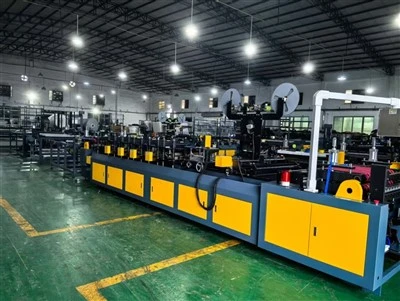
Let’s cut to the chase: The short answer is yes. But the longer, more honest answer is that “upgrading” isn’t a one-size-fits-all fix. It’s a layered process that ties directly to three huge, shifting pressures for our industry: supply chain chaos, client demand for custom, sustainable bags, and the quiet (but growing) labor shortage on factory floors. Over the years, I’ve seen dozens of suppliers stick to old, outdated machine models and get left behind as their customers switch to newer, adaptable setups. I’ve also seen smaller operations that thought they couldn’t afford upgrades turn a $15,000 retrofit into a $75,000 annual gain from reduced waste and faster turnaround. That’s the real value here—not the flashy marketing, but the practical, day-to-day improvements that make a machine earn its keep.
Let’s start with the biggest pain point we hear from customers these days: material variability. Not long ago, most paper used for bags was a standard 40-50 pound Kraft stock, all coming from a small number of mills. Today? Clients are using everything from 30 pound recycled office paper (leftover from corporate shredding programs) to 60 pound coated paper for luxury retail, and even blended paper-plastic composites for heavy-duty grocery bags. Old paper bag machines—built in the 2000s and early 2010s—are rigid: their rollers, cutters, and tension systems are calibrated for a specific paper thickness, so switching materials means stopping for an hour to adjust settings, scrap 20-30 feet of bad paper, and risk jams that lead to even more downtime.
Upgrading for material flexibility is the most impactful retrofit we’ve rolled out in the last three years. It’s not just replacing a part—it’s installing a modular tension control system that uses sensor tech to adjust pressure in real time, no manual tuning needed. We tested this on a customer in Ohio last year who was switching between 30 pound recycled paper and 55 pound coated stock 12 times a day. Before the retrofit, each switch cost 45 minutes and 120 feet of wasted paper. After? It took 120 seconds, and only 8 feet of waste. That’s a 90% reduction in downtime and waste, adding up to an extra 180 bags per hour, per shift. For a shop running two shifts, that’s almost 1.5 million extra bags a year—without buying a brand-new machine. And here’s the kicker: this upgrade costs less than 10% of the price of a new, fully flexible machine. For small to mid-sized bag manufacturers, that’s a no-brainer.
Next, let’s talk about automation for labor shortages. I don’t need to tell anyone in manufacturing that skilled labor is harder to find than ever. Back in 2018, a typical paper bag machine needed one operator to load paper, monitor jams, adjust settings, and stack finished bags. Today, most operators are stretched thin, and even small factories struggle to fill that role. The upgrades we’ve seen work best here are “bolt-on” automation tools that don’t require a complete machine rebuild.
Take auto-stacking and quality inspection systems, for example. Old machines require an operator to stand by, checking for uneven seals, torn edges, or misprinted logos, then stacking the good bags by hand. Our auto-stacking upgrade uses a high-resolution camera (the same kind you find in grocery store self-checkouts) that scans every bag as it comes off the line. If a bag has a flaw—say, a weak handle seal or a misaligned print—it diverts it to a reject bin automatically, and counts the good ones in stacks of 100 or 500, ready for shipping. We added this to a customer in Vietnam last quarter, who had been struggling to keep three operators on a single shift. After the upgrade, they only need one operator to oversee two lines, cutting their labor costs by 60% and reducing the number of flawed bags that reached clients by 88%. It’s not replacing workers—it’s letting them focus on higher-value tasks, like client orders and machine maintenance, instead of repetitive, eye-straining checks.
But the most exciting future upgrade we’re testing right now isn’t just about existing machines—it’s about “smart” integration. Right now, our paper bag machines are pretty standalone: they have a basic control panel, but no way to connect to a factory’s overall management system. That’s changing fast, and the next big upgrade will be IoT (Internet of Things) enabled systems that let machine owners track everything in real time: how much paper they’re using, when parts are about to wear out, even when supply chain delays might mean they need to adjust production.
I’ve been working with a tech partner in Finland for 18 months to test this IoT upgrade on 12 of our mid-range machine models. We’ve already seen that by monitoring tension sensor data, we can predict a roller will fail 72 hours before it actually breaks—so instead of losing 12 hours to a sudden breakdown, we can schedule a quick part swap during a planned downtime window. For a customer in Brazil, that meant reducing unplanned downtime by 40% in the first six months of using the system. Another test client, a luxury bag maker in Italy, used the IoT data to switch from 50 pound paper to a lighter 35 pound recycled stock, cutting their material costs by 18% without sacrificing strength—something they never would have noticed with old, manual tracking.
Critics will say, “Why upgrade when I can just buy a new machine?” Let’s do the math. A brand-new, high-end paper bag machine can cost anywhere from $150,000 to $300,000. A full set of the upgrades we’ve talked about—modular tension control, auto-inspection, and basic IoT integration—costs 20-25% of that price, and if you plan it right, you’ll recoup the cost in 8-12 months from reduced waste, lower labor costs, and faster order turnaround. We’ve had customers who skipped upgrades and bought new machines just to realize they didn’t need the full capabilities of a $250,000 model—they just needed to tweak their existing setup.
That said, not all upgrades are worth it. If you have a 10+ year old machine with a cracked frame or a worn-out drive system, it might be more cost-effective to replace it than to patch it up. The key is to assess your specific needs: if you’re switching materials frequently, start with the tension control upgrade. If labor is your biggest headache, go for auto-stack and inspection. If you’re looking to future-proof your operations, add the IoT module last—It’s the foundation that lets you adapt even more as tech changes.
At the end of the day, upgrading a paper bag machine isn’t about making it look “new”—it’s about making it work for the way you do business today, and how you’ll need to work tomorrow. The industry isn’t going back to the days of one-size-fits-all Kraft bags, or factories with lines that only need one operator. Clients want custom sizes, eco-friendly materials, and fast turnaround times, and supply chains are too unpredictable to rely on rigid, old equipment.

If you’re a bag manufacturer who’s been wondering if your machine can keep up, or if an upgrade is better than a replacement, let’s talk. I’ve spent 12 years walking factory floors, troubleshooting, and building upgrades that actually make a difference—no sales pitches, no jargon, just practical advice. Reach out to discuss your needs, and we can walk through what upgrades would fit your operation, your budget, and your long-term goals.
Honeycomb Paper Bag Making Machine References:
- National Paper Bag Manufacturers Association. (2023). "Material Flexibility and Efficiency in Bag Manufacturing"
- International Labour Organization. (2024). "Labor Shortages in Global Manufacturing: Sector-Specific Trends"
- Industrial Internet Consortium. (2023). "IoT Applications for Predictive Maintenance in Small Manufacturing Operations"
- Sustainable Packaging Coalition. (2022). "Trends in Recycled Paper and Alternative Packaging Materials"
Dongguan Doublehero Machinery Co., Ltd.
We are one of the most professional paper bag machine manufacturers and suppliers in China, also support customized service. With abundant experience, we warmly welcome you to buy paper bag machine for sale here and get quotation from our factory. For price consultation, contact us.
Address: Wangjin Industrial Area, Xitailong Village,Shatian Town, Dongguan City, Guangdong Province,China.
E-mail: Sxjx20152022@163.com
WebSite: https://www.doubleheromachine.com/
