Hey there, fellow home renovation enthusiasts and laundry room lovers, Laundry Cabinets
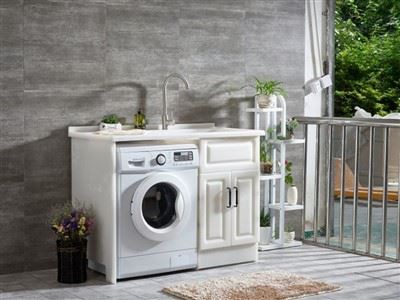
If you’ve ever found yourself staring at the new set of laundry cabinets you just installed—marveling at the way they tuck away detergent bottles, lint traps, and that random box of wool dryer balls you forgot about—you’ve probably had a small thought cross your mind: “Wait, should these have some way to breathe?” As a laundry cabinet supplier who’s been deep in this space for over a decade, I get it. There’s so much to nail when building these functional, stylish pieces—from matching your kitchen cabinet finish to fitting around that bulky front-loading washer—that ventilation can feel like an afterthought. But over the years, I’ve seen way too many clients run into avoidable issues because they skipped this key detail, and today I want to break down exactly why laundry cabinets need ventilation, what happens when you skip it, and how to do it right.
Let’s start with the basics: why is a laundry room different from, say, a regular kitchen or bathroom? Your kitchen cabinets store dry goods, your bathroom holds toiletries, but your laundry room has two major appliances that pump out more moisture and air than you might realize. Washers and dryers aren’t just cleaning clothes—they’re moving and heating water, and that process releases humidity. A standard top-loading washer releases around 10 to 15 liters of water vapor per load, while front-loading models (which are more popular now) are actually more efficient, but they still put out around 8 to 12 liters per load. Then there’s the dryer: even if you have a vented one that pushes hot, moist air outside, the ducting sometimes leaks, especially if it’s old or poorly installed. If you have a heat pump dryer (which is growing in popularity for energy savings), it does recirculate air, but it still generates a fair bit of ambient humidity that gets trapped in small, enclosed spaces.
Now, if you build a solid laundry cabinet around these appliances without any ventilation, that moisture has nowhere to go. I’ve had clients call me in a panic after 6 months of installing custom cabinets, saying the inside of their cabinet near the washer smells moldy, or they’re noticing warping on the bottom panel. Mold and mildew love damp, dark, stagnant spaces—and laundry cabinets that seal off the area around your washer and dryer are the perfect breeding ground. I had a customer in Chicago a few years back who installed his cabinets right up against his new front-loader, no gaps, no vents. By winter, when the furnace was running and the air was extra dry, the condensation from the washer was sticking to the cool cabinet wood, and within a year, he had to replace half the bottom panels because of rot. That’s not the kind of hassle anyone wants when they drop $3,000 on custom cabinets.
But wait—isn’t there such a thing as too much ventilation? If you’re pulling in unconditioned air from outside, especially in extreme climates, that can lead to energy loss. In the winter, cold air leaking into the laundry room means your heater has to work harder to keep the whole house warm, and in summer, hot, humid air can counteract the AC. That’s why good laundry cabinet ventilation isn’t just cutting a hole in the side—it’s about targeted, balanced ventilation that pulls out the moist air near the appliances without disrupting the rest of your home’s comfort.
Let’s talk about the science behind it, because it’s not just a guess—this is based on building codes and indoor air quality (IAQ) research. The EPA has guidelines for indoor air quality that note that stagnant, high-humidity spaces can exacerbate allergies, asthma, and even respiratory issues, especially for people who spend a lot of time in the laundry room folding clothes or working. A 2022 study from the Indoor Air Journal found that enclosed laundry spaces without proper ventilation had 3 times higher levels of volatile organic compounds (VOCs) from laundry detergents and fabric softeners, plus 2.5 times more mold spores, compared to spaces with dedicated ventilation. That’s a big deal for anyone with kids, pets, or family members with sensitivities.
So what are the actual ways to ventilate laundry cabinets, and which work best? As a supplier, we’ve tested a few different methods over the years, and we’ve landed on a few go-to solutions that balance function, style, and ease of installation.
First, passive ventilation is the simplest and most popular for most homes. This means leaving intentional gaps where air can flow in and out. For cabinets surrounding a front-loading washer and dryer, we typically recommend leaving a 2-inch gap between the bottom of the cabinet and the floor, and a 1-inch gap between the top of the cabinet and the ceiling, as long as there are no obstructions like floor vents or ceiling ducts. Then, add louvered panels for the cabinet doors or for the side panels adjacent to the appliances. Louvers look sleek, not utilitarian, so they don’t ruin the clean look of custom cabinets, and they let air circulate freely while still keeping most of your stored items (like detergent bottles) hidden from view. We also sometimes add vent grilles on the back of the cabinet, if it’s built against an interior wall, to pull air into the space from behind.
For homes in extremely humid climates—like Florida or the Gulf Coast—active ventilation might be a better fit. This uses a small, low-energy fan (we partner with a few brands that make fans specifically for laundry cabinets that use less than 5 watts of power, so they barely add to your electricity bill) to pull moist air out of the cabinet and either vent it to the outside or circulate it back to the main laundry room. The key here is that the fan is triggered automatically by a humidity sensor, so it only runs when it’s needed, not constantly. I had a client in Miami who installed custom cabinets with active ventilation, and she told us after a year she didn’t notice any difference in her energy bill, but she didn’t have to worry about mold even during the 6-month rainy season.
Another thing to consider: if you’re storing laundry-related items inside the same cabinets (which most people do), ventilation doesn’t have to mean those items get exposed. We design our cabinets with adjustable shelving, so detergent bottles and fabric softeners can be placed higher up, away from the direct moisture near the washer, while still leaving the lower area around the appliances open for air flow. I always tell clients: the ventilation is for the space around the appliances, not for the entire cabinet. You don’t need air circulating through your shelf of dryer sheets—you need the air where the moisture is moving to and from.
Wait, but what if you have a laundry closet instead of a full room? A lot of people have laundry nooks that are 3 feet wide or so, with stacked washer and dryer. Does ventilation still matter there? Absolutely—if anything, it’s more important in smaller spaces. I had a client in New York City who had a stacked set in a 2.5-foot closet, and he built solid cabinets around it, thinking it would be more secure. Within 8 months, the closet smelled so bad he couldn’t use it to fold clothes. The solution? We added two small louvered vent grilles on the top and bottom of the cabinet doors, and even though the space was tiny, the air started circulating, and the smell went away. In small, enclosed laundry spaces, the moisture gets trapped much faster, so even a small amount of targeted ventilation makes a huge difference.
Let’s also talk about common myths I hear all the time. One is: “My dryer is vented outside, so the laundry room already has enough ventilation.” That’s partially true, but the dryer’s vent is only pulling air out of the dryer itself—any moisture that escapes from the washer, or leaks from the dryer duct, gets trapped in the cabinet space. I’ve seen duct leaks that were so bad, the cabinet behind the dryer was soaking wet even after the dryer was done running. Another myth: “Ventilation will make my cabinets less durable.” If you do it right—using high-quality materials, like moisture-resistant plywood or MDF, and leaving enough gaps for air flow—it actually makes them more durable. We use a moisture-resistant coating on all our cabinets that’s paired with ventilation, so we’ve had cabinets last 10 years or more with no rot, no warping, no mold.
So, what should you do if you’re renovating your laundry room or installing new cabinets right now? First, measure the space around your washer and dryer, and plan for gaps. If you’re building custom cabinets, work with your supplier to add louvered panels or vent grilles—they don’t have to look like an afterthought, we integrate them seamlessly into the cabinet design so you can’t tell they’re vents at first glance. If you’re on a tight budget, passive ventilation is totally sufficient for most climates, but if you live in a very humid area, or have a front-loading washer that runs frequently, it’s worth investing in a small, humidity-controlled fan.
If you’re worried about making the wrong choice, or you want to see examples of how we’ve installed ventilation in our past projects, reach out—we’ve worked with homeowners, contractors, and interior designers across the country, and we can help you figure out the best solution for your space. We don’t just sell cabinets; we help you build a laundry room that works for you, not against you. No more moldy smells, no more warped panels, just a functional, stylish space where you can tackle laundry without the stress.
At the end of the day, laundry cabinets need ventilation because laundry rooms are inherently damp, enclosed spaces, and ignoring that detail will lead to avoidable headaches down the line. It’s not just a code requirement (many local building codes now require at least some ventilation for laundry cabinet enclosures) — it’s a way to protect your investment in new cabinets, improve your indoor air quality, and keep your laundry room smelling fresh for years to come.

If you’re ready to plan your new laundry cabinets and want to talk through ventilation options, feel free to connect with our team for a procurement consultation. We’ll walk you through our designs, answer all your questions, and help you build the perfect laundry space for your home.
Mop Sink References
ASHRAE Standard 62.1: Ventilation for Acceptable Indoor Air Quality, 2022
Indoor Air Journal, Vol. 32, No. 4, "Moisture and Mold Levels in Enclosed Laundry Spaces", 2022
EPA Guidelines for Mold Remediation and Indoor Air Quality, 2021
International Residential Code (IRC), Chapter 12: Mechanical Systems, 2021
Zhejiang Engery Industry and Trade Co., Ltd.
As one of the leading laundry cabinets manufacturers and suppliers in China, we also support customized service with low price. Please feel free to buy bulk high quality laundry cabinets made in China here from our factory. Contact us for pricelist.
Address: Building 1, Wanshangcheng, No. 8, Jingxing West Road, Hushan Street, Jiangshan City, Quzhou City, Zhejiang Province
E-mail: 15005702323@163.com
WebSite: https://www.balconylaundry.com/
