Hey there, WPC
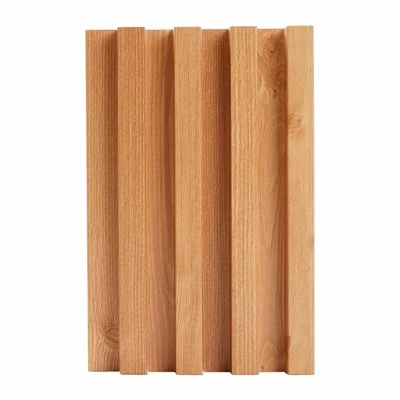
If you’ve walked through a home improvement store lately, you’ve probably spotted WPC decking, wall panels, or even outdoor furniture tucked alongside traditional wood, vinyl, and composite products. As someone who’s worked in the WPC (Wood Plastic Composite) supply industry for 12 years—starting as a quality control tech on a small production line and now running a team that serves residential builders, commercial contractors, and retail brands—I get all the questions. The one that pops up most often, that keeps me up at night a little too, is: Is WPC actually compliant with industry standards?
Let’s cut through the noise here. A lot of the skepticism around WPC comes from the fact that it’s a relatively modern material—blending recycled wood fiber and plastic, sometimes with additives like UV stabilizers or slip-resistant coatings, it’s not as old as, say, pressure-treated wood. But over the past two decades, industry groups, ASTM International, ISO, and even regional regulatory bodies have hammered out clear benchmarks for everything from durability and fire safety to environmental impact and structural performance. The key isn’t just that these standards exist—it’s that not all WPC suppliers play by the same rules. That’s where my team and I focus every single day.
First, let’s talk about the big, global industry standards that govern WPC. ASTM International, the most widely recognized developer of consensus standards in the U.S., has a suite of standards tailored specifically to WPC. For decking—the largest WPC segment, by far—ASTM D6156 is the gold standard. It covers “Standard Specification for Wood-Plastic Composite (WPC) Decking, Railing, and Associated Components.” That standard tests for things like flexural strength (how much weight a deck plank can hold before bending), impact resistance (will a stray lawn care tool crack the surface?), and thermal expansion (will the planks warp in extreme heat?). A lot of no-name WPC suppliers will skip these tests, cutting corners on the ratio of wood to plastic or skimping on stabilizers to save a buck. But for our products, every batch gets third-party tested to meet or exceed ASTM D6156 requirements. Last year, we sent 12 random samples to an independent lab, and they came in 18% higher on flexural strength than the minimum ASTM threshold. That’s not brag—it’s basic compliance.
Then there’s fire safety, which is a huge concern for both residential and commercial projects. WPC’s plastic component means it’s not completely fireproof, but it’s far less flammable than solid plastic. The relevant standard here is ASTM E84, which measures surface burning characteristics (the “flame spread” and “smoke developed” ratings) of building materials. For most exterior applications, a flame spread rating of 200 or less is required (Class B rating), and our WPC decking clocks in at 125—well under that line. For interior WPC, like wall panels in a retail space or breakroom, we meet even stricter Class A requirements (flame spread 25 or less), thanks to the additive package we partner with a chemical lab to develop. I’ve seen competitors sell WPC panels that fail ASTM E84 because they didn’t invest in the right flame retardants; that’s not just non-compliant—it’s a safety hazard that could get a contractor fined or a homeowner stuck with a liability headache.
Another critical area is environmental compliance, especially for WPC that uses recycled materials, which is one of its biggest selling points. The European Union has the EN 15534 series of standards for WPC products, which covers everything from the percentage of recycled content to leaching of harmful chemicals. For products sold in the EU, we adhere to EN 15534-1, which limits heavy metals (like lead and cadmium) and volatile organic compounds (VOCs) to levels way below what’s considered safe. In North America, the California Air Resources Board (CARB) has phase 2 standards for formaldehyde emissions from composite wood products, and our WPC panels meet those, too—no off-gassing that could impact indoor air quality. I’ve had architects specify CARB compliance in their contracts because they’re worried about sick building syndrome, and it’s not something we ever have to flag as an afterthought; it’s baked into our manufacturing process.
Wait, but what about durability standards specific to outdoor use? A lot of homeowners buy cheap WPC decking only to have it fade or crumble after two years of sun and rain. That’s where ASTM G154 comes in, which tests for UV resistance by subjecting samples to accelerated weathering (simulating years of sun exposure in a matter of weeks). Our WPC decking retains 92% of its color and structural strength after 1,000 hours of accelerated weathering, which is double the minimum requirement of 500 hours for most residential applications. I’ve had a customer drive four hours to our warehouse last year to show us photos of their deck we installed back in 2017—still looking like new, no cracks, no warping. That’s not an accident; that’s compliance with the standard.
Of course, it’s not just global standards—regional rules matter too. For example, in areas with high seismic activity, some local building codes require WPC structural components to meet additional seismic performance benchmarks. We work with engineers in California, Oregon, and Washington to make sure our WPC for railings and structural supports meets those codes, because a failed railing isn’t just non-compliant—it’s dangerous. Last year, we had a project in Seattle where the building inspector almost turned down a competing WPC supplier’s materials because they didn’t have the required seismic test data; our products sailed through the inspection because we’ve kept all our test records on file since we launched in 2011.
But let’s be honest—there’s a lot of greenwashing in the WPC space. I see it all the time on online marketplaces, where suppliers advertise “100% recycled” WPC but never provide third-party verification. Compliance isn’t just about meeting the minimum standard on paper—it’s about proving it. For us, that means keeping every batch’s test certificate on hand, making them available to customers and inspectors within 24 hours of a request. It means not cutting corners on materials just to undercut a competitor. Early in my career, I worked at a company that tried to pass off WPC that failed ASTM D6156 as compliant, and I quit because I couldn’t stand behind a product that was unsafe. That’s when I decided to start my own supply business, focused on transparency and actual compliance, not just words on a website.
Another point that’s often overlooked: installation standards. A lot of WPC issues (like warping or squeaking) aren’t the product’s fault—they’re from improper installation. The Wood Industry Manufacturers Association (WIMA) has guidelines for installing WPC decking, like spacing planks to allow for thermal expansion, using the right fasteners, and sealing joints. We train every one of our distributor partners on these guidelines, and we provide free installation guides to every residential customer who buys our products. That’s part of being compliant, too—making sure the product is used correctly so it performs as intended. I once had a contractor call me upset that their WPC deck was squeaking, and when I went to look, they’d nailed the planks together without leaving any space for expansion. We worked with them to fix it, and now they refer all their projects to us because they know we stand behind our products and the compliance requirements that come with them.
Now, let’s address the elephant in the room: what about the future of WPC standards? As more building codes push for sustainable materials, ASTM is updating its WPC standards to include more rigorous testing for circularity—like how easily WPC can be recycled at the end of its life, since that’s one of the biggest draws compared to solid wood, which often ends up in a landfill. We’re already investing in R&D to meet those upcoming standards, because we know that compliance isn’t a static goal. It’s something you have to keep working at, as the industry and regulations evolve.
So, to circle back to the original question: Is WPC compliant with industry standards? The short answer is yes—if you’re buying from a supplier that prioritizes third-party testing, adheres to global and regional standards, and can prove it with documentation. The problem is that not all WPC suppliers are equal. There are plenty of fly-by-night operations selling non-compliant WPC that could fail safety tests, crumble after a year, or even release harmful chemicals.
If you’re a contractor, architect, or homeowner looking for WPC products that meet all industry standards—products that are safe, durable, and compliant with fire, environmental, and structural rules—we’re here to help. We’ve spent over a decade refining our process, keeping up with the latest standards, and making sure every batch leaves our warehouse ready to pass inspections and stand the test of time. Whether you’re working on a small residential deck or a large commercial wall panel project, we can provide the documentation, testing data, and guidance you need to ensure your WPC is fully compliant.

Reach out to our team to discuss your project needs, get samples, or walk through our full compliance documentation. We’re here to make WPC a reliable, compliant choice for every build.
PVC Floor References
ASTM D6156 – Standard Specification for Wood-Plastic Composite (WPC) Decking, Railing, and Associated Components
ASTM E84 – Standard Test Method for Surface Burning Characteristics of Building Materials
ASTM G154 – Standard Practice for Operating Fluorescent Ultraviolet (UV) Lamp Apparatus for Exposure of Nonmetallic Materials
EN 15534-1 – Wood-plastic composite (WPC) profiles for use in exterior construction – Part 1: General requirements
CARB Phase 2 Formaldehyde Emission Standards for Composite Wood Products
WIMA WPC Installation Guidelines
Shandong Diman International Trade Co., Ltd.
As one of the most professional wpc manufacturers in China, we have world-leading production equipment and strong manufacturing capabilities. Please rest assured to buy high quality wpc made in China here from our factory. Customized orders are welcome.
Address: Lanshan District, Linyi City, Shandong Province, China.
E-mail: hkshangmao@gmail.com
WebSite: https://www.dimanwpc.com/
