As a quenching furnace supplier who’s spent the last 12 years walking the floors of job shops, aerospace component plants, and tool steel manufacturing facilities, I hear this question at least three times a week: “What do we actually need from our quenching furnace materials when it comes to thermal conductivity?” It’s easy to gloss over this detail—many operators fixate on temperature accuracy or load capacity, but skip the part that makes the furnace work reliably, batch after batch, and keeps operating costs from spiraling. Let me break this down from the perspective of someone who’s watched a $500k production furnace fail because they cut corners on insulation conductivity, and another run 10 years straight with the right materials. Quenching Furnace

First, let’s ground this in what quenching does. Quenching is all about heating metal (think tool steel, titanium, gear steel) to a precise austenitic temperature, then cooling it extremely fast to lock in hardness, strength, and wear resistance. The furnace that does this isn’t just a metal box—it’s a system where every component’s thermal properties directly impact two things: process consistency and energy efficiency. Thermal conductivity, at its core, is a material’s ability to transfer heat. For quenching furnaces, we care about two sides of that: low thermal conductivity for the insulation lining (so we don’t waste heat escaping to the atmosphere) and balanced thermal conductivity for elements like radiant tubes, muffles, and load supports (so heat transfers evenly to every part of the load, no hot spots or cold spots that ruin a batch).
Let’s start with insulation, because that’s the biggest piece of the thermal conductivity puzzle for quenching furnaces. Quenching runs at really high temperatures—most production units operate between 850°C (1562°F) for steel quenching, up to 1200°C (2192°F) for high-alloy tool steel, and even higher for some specialty applications. Insulation here can’t just trap heat; it has to maintain its conductivity rating over thousands of thermal cycles, because quenching furnaces heat up and cool down every batch. If insulation has too high a thermal conductivity, you’re losing heat through the furnace walls faster than the heating elements can keep up. That means higher energy bills, uneven temperature zones, and longer cycle times—each of which eats into your productivity.
I’ve seen a shop install a cheap insulation on their new furnace to save $2,000 upfront, only to find their natural gas use jumped 28% in the first six months. Why? That insulation had a thermal conductivity of 0.3 W/m·K at 1000°C, vs. the recommended 0.18 W/m·K. Over a year, that added up to $18,000 in extra fuel costs, plus they had to replace the insulation 3 years early because it degraded faster under the constant thermal cycling. For insulation materials in standard quenching furnaces (800°C to 1200°C), the sweet spot is generally thermal conductivity between 0.15 and 0.25 W/m·K at operating temperature. That range balances two needs: low heat loss, and structural integrity. If you go much lower than 0.15, you’re often using more expensive materials like high-purity alumina or silica aerogel, which might be overkill for most production shops unless they’re running ultra-high-temperature processes.
Now, the other side: components that need to transfer heat, not trap it. This is where a lot of people mix up insulation needs with component needs. Radiant tubes, which are the heat source in many batch quenching furnaces, carry hot gas or electric elements that radiate heat to the load. Muffles, which enclose the load to protect it from oxidation, and load supports (the trays or pins that hold parts inside the furnace) also rely on controlled thermal conductivity. If these parts have too low a thermal conductivity, heat won’t spread evenly across the load. A part on the hot side of the tray will quench too hard, a part on the cold side will be too soft—both are scrap, and that’s thousands of dollars wasted per batch.
For these load-bearing, heat-transfer components, the requirement is different. Radiant tubes and muffles used in standard quenching (800°C to 1100°C) need thermal conductivity between 15 and 30 W/m·K at operating temperature. Why? Materials like silicon carbide (SiC) or high-alloy stainless steel fit this range perfectly. Let’s test that: a 1000°C radiant tube made of standard SiC has a thermal conductivity of about 22 W/m·K, which transfers heat evenly along its length. If you used a material with lower conductivity, like pure alumina (which has ~10 W/m·K at 1000°C), the end of the tube would be 50°C cooler than the center, leading to uneven heating. That’s a huge problem for gear manufacturing, where even a 20°C temperature difference can change the final hardness of a gear tooth by HRC 2 to 3—enough to make a part fail inspection.
Load supports, which hold heavy parts like axles or die casts, have an extra layer: they need thermal conductivity that’s high enough to transfer heat, but low enough that they don’t warp or degrade under repeated heating and cooling. For these, we usually recommend thermal conductivity between 10 and 20 W/m·K. If they’re too conductive, they’ll draw too much heat away from the part, creating a cold spot under the load. If they’re too low, they’ll crack from thermal stress over time. I worked with a commercial heat treat shop a few years back that switched from standard silicon nitride pins (thermal conductivity 18 W/m·K) to cheaper alumina pins (9 W/m·K) to save $0.50 per pin. Within 18 months, 12 pins cracked, dropping a $12,000 load of tool steel into the quench tank. That’s a way bigger cost than the pin savings.
We also have to talk about how thermal conductivity changes with temperature, because that’s not a static number. A lot of shops look at room-temperature conductivity specs, not the operating temperature, and that’s a mistake. For example, carbon steel has a thermal conductivity of about 50 W/m·K at 25°C, but at 1000°C, that drops to around 20 W/m·K—so it’s useless for radiant tubes, because it would be too conductive at low temps and not conductive enough at high temps. High-alloy materials like 304 stainless steel? At room temp it’s ~16 W/m·K, at 1000°C it’s ~27 W/m·K—close enough, but it will degrade faster than SiC at repeated high cycles. That’s why we match material conductivity to the furnace’s maximum operating temp, not the ambient.
Another key area: atmosphere integrity. Many quenching furnaces use controlled atmospheres (nitrogen, argon, or endothermic gas) to prevent parts from oxidizing during heating. The insulation and muffle materials have to not just have the right thermal conductivity, but also resist atmosphere penetration. Wait, how does that tie to thermal conductivity? Because if a muffle has a high thermal conductivity, it’s more likely to have microcracks from thermal cycling, which let atmosphere leak out. That ruins the part surface, and also requires you to run more atmosphere to make up for leaks, adding operating costs. So for muffles, we look for a material that hits that 15-30 W/m·K conductivity range, but also has low porosity, to keep the atmosphere contained.
Let’s also address edge cases, because not all quenching is the same. If you’re running vacuum quenching for aerospace components (like titanium turbine blades), the rules shift a little. Vacuum furnaces don’t use muffle tubes—they rely on radiant heat from the chamber walls, which are made of graphite or molybdenum. Graphite has a thermal conductivity of ~150 W/m·K at 1000°C, which is way higher than the standard range we talked about. Why? Because in a vacuum, there’s no gas to transfer heat, so the chamber walls need to radiate heat effectively. But the insulation in a vacuum quenching furnace is different too—usually graphite felt, which has a thermal conductivity as low as 0.08 W/m·K at 1000°C, because vacuum amplifies heat loss, so you need even better insulation. For these specialty applications, the thermal conductivity numbers adjust, but the logic remains: insulation is low, heat-transfer components are balanced to avoid hot/cold spots.
I’ve had customers ask me: “Can we just use one material for everything to simplify maintenance?” That never works. I saw a shop try that a few years back, using the same low-conductivity insulation for their radiant tubes. The tubes never heated evenly, so 30% of their batches were out of spec, and the tubes wore out in half the time because they had to run hotter to make up for lost heat. It’s like using a wool blanket to line a car’s engine block—its job is to trap heat, not transfer it where it’s needed.
Now, let’s tie this back to your goals as a furnace owner or operator. Getting thermal conductivity right isn’t just a spec—it’s a direct line to lower energy costs, less scrap, and longer equipment life. A 2022 study from the Industrial Heating Equipment Association found that optimizing furnace insulation and component thermal properties can cut energy use by 15-25% and reduce part rejection rates by up to 12% for quenching processes. For a shop running 1,000 batches a year, that’s $20,000 to $35,000 in annual savings, just from getting conductivity right.
If you’re reading this, you’re probably looking to upgrade an old furnace, spec a new one, or troubleshoot a recurring issue with uneven quenching. Maybe your batches are coming out too soft on one end, or your utility bills are way higher than industry averages. That’s where the thermal conductivity of your materials is almost always a root cause.
I’ve been in this game long enough to know that spec’ing the right materials isn’t about buying the cheapest option—it’s about buying the right balance. As a quenching furnace supplier, I don’t push the most expensive materials just to make a sale. I look at your process: what temperatures do you run? What parts do you quench? What’s your budget for both upfront costs and ongoing operations? Then I recommend materials that hit the thermal conductivity sweet spot for your exact needs.
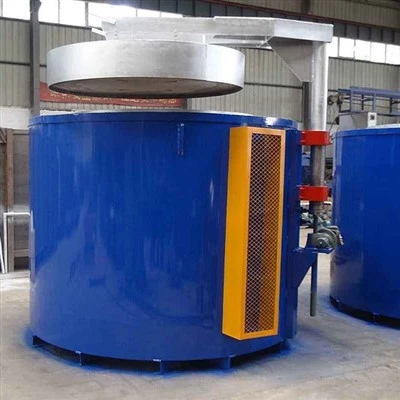
If you’re ready to stop guessing about your furnace’s material performance and start seeing real improvements in your process efficiency and part quality, I’d welcome the chance to talk through your specific application. We can walk through your current setup, go over the thermal conductivity requirements tailored to your quenching process, and find a solution that works for your bottom line.
Quenching Furnace References:
- "Thermal Properties of Refractory and Insulation Materials at Elevated Temperatures", Industrial Heating Equipment Association, 2021.
- Quenching Furnace Materials: Selection, Performance, and Maintenance, ASM International, 2019.
- "Energy Efficiency in Industrial Heat Treatment", U.S. Department of Energy, Office of Energy Efficiency and Renewable Energy, 2022.
- Silicon Carbide Components for High-Temperature Industrial Applications, Journal of Materials Engineering and Performance, Vol. 30, No. 7, 2021.
Danyang Dingfeng Industrial Furnace Co., Ltd.
Danyang Dingfeng Industrial Furnace Co., Ltd. is one of the most experienced quenching furnace manufacturers and suppliers in China, also supports customized service with low price. Please feel free to wholesale high quality quenching furnace made in China here from our factory. For pricelist, contact us now.
Address: Lizhuang Economic Development Zone, Danyang City
E-mail: saleszk@dffurnace.com
WebSite: https://www.dffurnace.com/
