If you’ve ever spent a summer weekend lounging on a patio sofa, shaded by an outdoor canopy, or pulling a canvas tarp over a garden tool set, you’ve probably experienced a common frustration: fabric that stretches, shrinks, or warps after just a few months of sun, rain, and temperature swings. As someone who’s spent 12 years as an outdoor fabric supplier, I hear this complaint from customers all the time—from residential homeowners replacing frayed cushions to commercial landscapers looking for fabrics that hold up through year-round use. The thing most people don’t realize is that this issue boils down to dimensional stability: the fabric’s ability to retain its original size and shape when exposed to the harsh outdoor conditions that most indoor fabrics never have to face. Let’s break down what dimensional stability actually means for outdoor fabric, what causes it to fail, and what you should look for when choosing a material for your next outdoor project. Outdoor Fabric

First, let’s define dimensional stability simply: it’s a fabric’s resistance to changes in length and width after manufacturing, cleaning, and prolonged exposure to the elements. For outdoor applications, this isn’t just a cosmetic issue. A cushion cover that shrinks 10% after the first rain will slip off its foam insert, leaving lumpy, uneven seating that’s uncomfortable and uninviting. A canopy that stretches out of shape will sag, letting in more sun and rain, and the seams will pull apart much faster than a properly stable fabric. Even a simple garden flag that wrinkles and warps will fade unevenly and lose its message within a season.
What causes outdoor fabric to lose dimensional stability? There are three main factors: fiber type, manufacturing processes, and environmental exposure. Let’s start with fibers. Natural fibers like cotton, linen, and hemp are soft and breathable, but they’re terrible for dimensional stability. Cotton, for example, absorbs water quickly—up to 27 times its weight in liquid. When cotton gets wet, its individual fibers swell, and the spaces between them narrow, which causes the fabric to shrink when it dries. On the flip side, when cotton is exposed to intense heat, the fibers relax, and the fabric can stretch permanently. I’ve had customers come to me with patio cushions made of cheap cotton covers that stretched so much after one summer that the zippers burst. It’s not just cotton: linen has similar issues, and even hemp, which is often marketed as “outdoor-friendly,” shrinks up to 15% after the first wash, making it a poor choice for anything that needs a precise fit.
Synthetic fibers, by contrast, are the gold standard for dimensional stability in outdoor fabrics. Polyester, acrylic, and olefin (polypropylene) don’t absorb water the way natural fibers do—their hydrophobic structure means moisture sits on the surface, not in the fiber itself. That means when a polyester outdoor fabric gets wet, it barely shrinks, and when it dries, it returns to its original size. Acrylic is even more resistant to stretching: it’s inherently resilient, so it bounces back from tension or heat without deforming. Olefin, which is lightweight and strong, is often used for high-performance applications like boat covers because it doesn’t stretch or shrink even after years of exposure. But not all synthetics are created equal. Low-quality polyester, for example, is often made from recycled plastic with weak molecular bonds. That means it can stretch over time, especially if it’s not treated with stabilizers. At my company, we test all our synthetic fabrics for molecular orientation—how tightly the polymer chains are bonded—to ensure they don’t stretch or shrink more than 2% after exposure. That’s a threshold most industry standards require, but many budget brands skip that testing to cut costs.
Next, manufacturing processes play a huge role in dimensional stability, even for the same fiber. Let’s take a look at what happens when a fabric is woven. Weaving uses interlaced threads, and how tightly those threads are woven, and the tension applied during weaving, directly affects how much the fabric will shift. For example, a plain weave (the crisscross pattern you see in most T-shirts) has more give than a tight twill or a basket weave. But if a plain weave is under-tensioned during manufacturing, the threads will relax over time, causing the fabric to stretch permanently. That’s why we use a process called “relaxation drying” for all our fabrics: after weaving, we stretch the fabric to its finished dimensions and hold it there while it dries, so the fibers set in place. Without that step, even a high-quality polyester can stretch by 5-7% within a year.
Another key process is finishing. Outdoor fabrics need special treatments to protect them from sun, mold, and mildew, but some finishes can compromise dimensional stability. For example, heavy water-repellent coatings that are applied too thick can stiffen the fabric and cause it to crack when it’s stretched, leading to shape loss. Instead, we use a nanoscale water repellent that bonds to the fibers without coating the surface, so the fabric remains flexible and doesn’t warp over time. We also add UV stabilizers during the spinning process, not as a topcoat, so they don’t interfere with the fabric’s ability to hold its shape. Some brands add UV stabilizers as a post-treatment, which can flake off after a few washes, leaving the fabric vulnerable to both sun damage and shape change.
Now, let’s talk about the environmental factors that test dimensional stability. Outdoor fabrics aren’t just exposed to water and sun—they face extreme temperature swings, humidity, and even wind. In areas with four seasons, a patio cushion goes from 90°F (32°C) summer sun to freezing winter frost, and that cycle repeats every year. When fabric is exposed to cold, the fibers can become brittle, and when it warms up again, they relax. Over time, this repeated expansion and contraction causes the fabric to stretch or shrink. High-quality outdoor fabrics are tested for thermal stability, meaning they can handle temperature swings between -20°F (-29°C) and 150°F (66°C) without changing shape. I’ve seen budget fabrics that shrink 10% after one winter and stretch 10% the next summer, leaving cushions that are impossible to fit back on their foam inserts.
UV radiation is another big one. The sun’s UV rays break down the molecular bonds in fibers, which makes them weaker and less able to resist stretching. That’s why a fabric that’s stored in a garage will last much longer than the same fabric left in direct sun. Most synthetic outdoor fabrics are treated with UV stabilizers, but the concentration matters. If a fabric has less than 5% UV stabilizer, the rays will break down the bonds within three to five years, leading to shape loss and fading. Our fabrics have 8% UV stabilizer, which means they can resist fading and shape change for 10 years or more when used in direct sun.
Humidity also plays a role. High humidity can cause fibers to absorb moisture, even if the fabric is synthetic. For example, some cheap polyester fibers have porous structures that can trap small amounts of moisture, leading to minor shrinkage during drying. That’s why we use closed-cell polyester fibers, which don’t absorb moisture at all, to ensure dimensional stability in humid climates like the Southeast US or tropical regions.
So, what does this mean for you, whether you’re a homeowner looking for patio fabric, a landscaper designing a commercial outdoor space, or a retailer stocking outdoor goods? How do you choose a fabric with good dimensional stability? First, check the fiber content. Avoid any fabric that lists cotton, linen, or hemp as a primary fiber—those are for indoor use only. Look for fabrics made from 100% high-tensile polyester, acrylic, or olefin. Next, ask about manufacturing processes. Does the supplier use relaxation drying? Do they spin in UV stabilizers, or apply them as a topcoat? What’s the fabric’s shrinkage rate? A good outdoor fabric should have a shrinkage rate of less than 2% after washing or exposure. Finally, look for third-party testing certifications. Certifications like ASTM D4972 (Standard Test Methods for Dimensional Change of Fabrics After Laundering or Dry Cleaning) confirm that the fabric has been tested for dimensional stability, not just marketed as “outdoor-friendly.”
At my company, we’ve built our reputation on fabric that holds its shape, even after years of use. Last year, a landscaping company came to us with 50 patio cushions that had been on display for three years. The cushions’ original covers had stretched so much that they couldn’t be replaced, and the company had wasted thousands of dollars on budget fabric. They switched to our high-stability polyester fabric, and after 18 months, the covers show no signs of stretching, shrinking, or warping. That’s the impact of good dimensional stability: it saves you money in the long run, because you don’t have to replace fabric every year, and it makes your outdoor spaces look neat and functional, instead of frayed and lumpy.
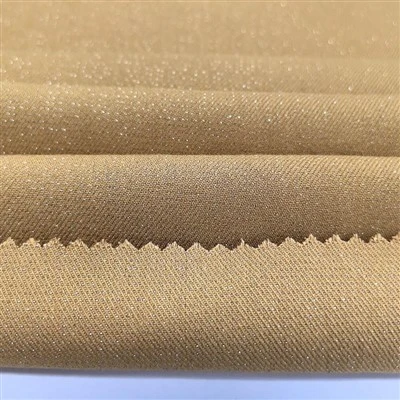
I know there are a lot of options out there, and it can be overwhelming to tell the difference between a quality outdoor fabric and a cheap one that will fall apart. That’s why we offer free fabric samples for anyone who wants to test dimensional stability for themselves. Our samples are designed to give you a sense of how the fabric feels, but more importantly, you can test it: stretch it, get it wet, dry it, and see if it returns to its original shape. If you’re working on a project, whether it’s a small residential patio or a large commercial outdoor space, we can help you choose the right fabric with the exact dimensional stability properties you need. Don’t settle for fabric that will warp, shrink, or stretch after a few months—reach out to our team to discuss your requirements and get a custom solution for your outdoor fabric needs.
Sportswear Fabric References
- ASTM International. (2020). Standard Test Methods for Dimensional Change of Fabrics After Laundering or Dry Cleaning (ASTM D4972).
- Textile Institute. (2018). Outdoor Textiles: Properties and Performance. Woodhead Publishing.
- Hurren, C., & Gosling, P. (2019). Dimensional Stability of Synthetic Outdoor Fabrics: The Role of Fiber Molecular Structure. Journal of Industrial Textiles, 48(7), 1245-1262.
- American Association of Textile Chemists and Colorists. (2021). Test Method for Dimensional Changes of Textile Fabrics After Exposure to Weathering (AATCC 186).
Hangzhou Kangsheng Textile Co., Ltd.
Hangzhou Kangsheng Textile Co., Ltd. is one of the most professional outdoor fabric manufacturers and suppliers in China. We have world-leading production equipment and strong manufacturing capabilities. Please rest assured to wholesale bulk high quality outdoor fabric from our factory. Also, custom service is available.
Address: 22# Building, K7 Original park,No.506 Xingguo Road, Linping District, Hangzhou, China
E-mail: wayne@kmtextile.net
WebSite: https://www.kangshengtextile.com/
