Hey there! I’m a supplier of grinding parts, and today I wanna chat about how to measure the flatness error of ground parts. It’s a crucial aspect in the manufacturing world, especially when it comes to high – precision grinding parts. Grinding Parts
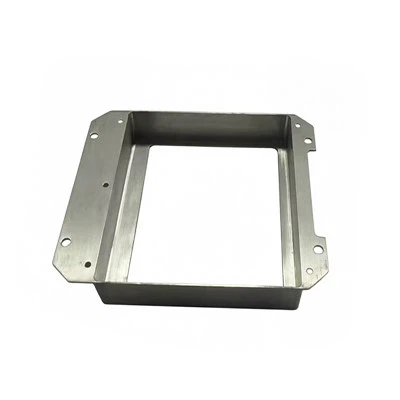
First off, let’s understand why flatness error measurement is so important. In many industries, like aerospace, automotive, and machinery, the flatness of parts can directly affect the performance and reliability of the final product. For example, in an engine, if the mating surfaces of components aren’t flat enough, it can lead to leaks, reduced efficiency, and even premature failure.
Now, let’s get into the methods of measuring flatness error.
1. Visual Inspection
This is the most basic method. With just your eyes and a good light source, you can spot obvious flatness issues. You look for any visible warping, dents, or unevenness on the surface of the ground part. It’s quick and doesn’t require any fancy equipment. But it has its limitations. It can only detect relatively large flatness errors, and it’s highly subjective. What one person might consider flat, another might see as slightly uneven. For small – scale or high – precision parts, visual inspection alone isn’t enough.
2. Straightedge and Feeler Gauge
A straightedge is a simple yet effective tool for measuring flatness. You place the straightedge on the surface of the ground part. If there are any gaps between the straightedge and the part, you can use a feeler gauge to measure the size of those gaps. This method gives you a more quantitative measurement compared to visual inspection. You can get a rough idea of how much the surface deviates from being perfectly flat. However, it’s still not very accurate for very small flatness errors. The accuracy of the straightedge and the feeler gauge themselves also limits the precision of the measurement.
3. Optical Flat and Interferometry
This is a more advanced method. An optical flat is a highly polished glass plate. When you place the optical flat on the ground part, light waves are reflected from both the optical flat and the surface of the part. By observing the interference patterns formed by these reflected light waves, you can measure the flatness error. The interference fringes tell you about the height differences on the surface of the part. This method is extremely accurate and can detect very small flatness errors, down to the micron level. But it requires a clean and stable environment, and the equipment can be quite expensive.
4. Coordinate Measuring Machine (CMM)
A CMM is a high – tech device that can measure the 3D coordinates of points on the surface of a part. By taking a large number of points on the surface of the ground part, the CMM can calculate the flatness error. It’s very accurate and can handle complex shapes. You can program the CMM to measure specific areas of the part and get detailed reports. However, CMMs are expensive to purchase and maintain, and they require trained operators.
5. Laser Scanning
Laser scanning is a relatively new and popular method. A laser scanner emits a laser beam onto the surface of the part, and the reflected light is detected by a sensor. The scanner can quickly capture the shape of the surface and generate a 3D model. Software can then analyze this model to calculate the flatness error. It’s fast, non – contact, and can cover a large area in a short time. But it also has some limitations, such as being sensitive to surface finish and environmental conditions.
As a grinding parts supplier, I know how important it is to ensure the flatness of our products. We use a combination of these methods to measure the flatness error of our grinding parts. For initial inspections, we might start with visual inspection and straightedge – feeler gauge measurements. For high – precision parts, we rely on optical flat and CMM measurements.
We understand that different customers have different requirements for flatness. Some might need parts with extremely high flatness tolerance, while others can accept a slightly larger error. That’s why we offer a range of grinding parts with different flatness specifications. Whether you’re in the automotive industry, looking for parts for an engine block, or in the electronics industry, needing flat components for circuit boards, we’ve got you covered.
If you’re in the market for high – quality grinding parts with accurate flatness control, don’t hesitate to reach out. We’re here to provide you with the best products and services. Our team of experts can work with you to understand your specific needs and ensure that the parts we supply meet your exact requirements.

Let’s start a conversation and see how we can collaborate to make your projects a success. Whether you have a small order or a large – scale production requirement, we’re ready to assist you.
Automation Parts References
- "Metrology for Engineers" by D. H. Staubli
- "Handbook of Precision Engineering" by M. R. Kannatey – Asibu Jr.
Suzhou Huaquan Electromechanical Manufacturing Co., Ltd.
As one of the leading grinding parts manufacturers in China, we warmly welcome you to buy bulk customized grinding parts made in China here from our factory. If you have any enquiry about pricelist and free sample, please feel free to email us.
Address: No.7550 Mudong Road, Hengjing Town, Wuzhong District, Suzhou City, Jiangsu Province, China
E-mail: Huaquan2005@outlook.com
WebSite: https://www.huaquancnc.com/
